
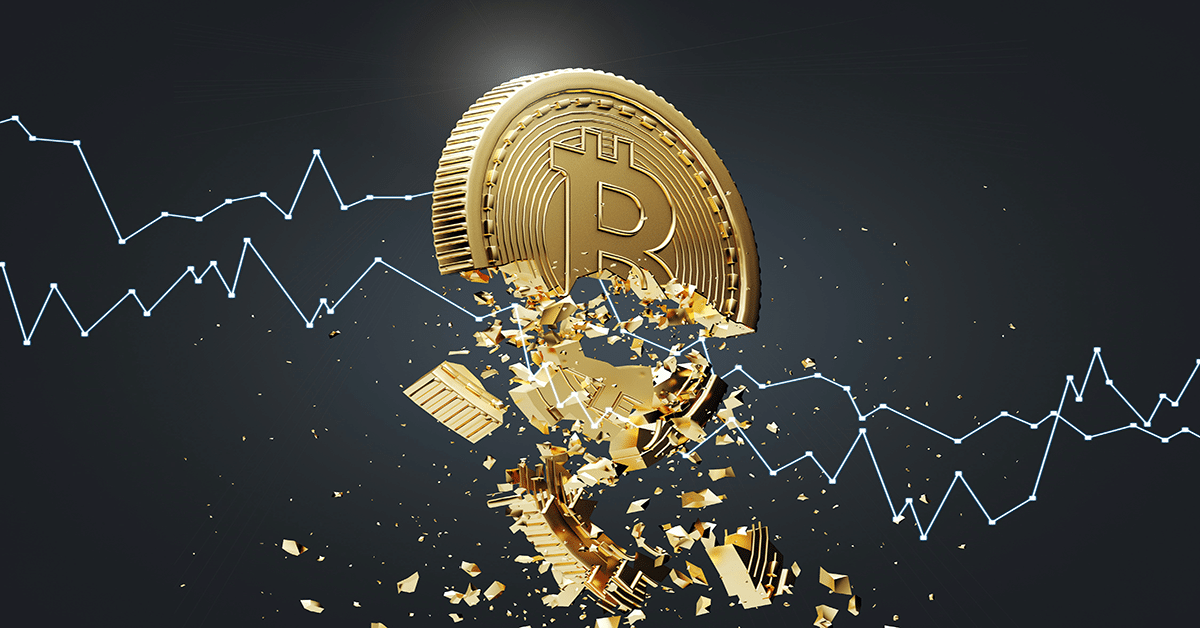
In traditional finance, central banks operate on an inflationary model, perpetually expanding the money supply and diluting purchasing power. In the crypto economy, specific protocols adopt the opposite stance: they weaponize deflation.
When a project decides to burn assets, it is not effectively destroying value; it is consolidating it for the remaining holders. This is the digital equivalent of a stock buyback, but with mathematical finality. There is no board of directors that can vote to reissue shares next quarter. Once tokens are sent to a “null address” – a wallet with no private key – they are removed from the circulating supply forever. They become mathematically inaccessible.
For the astute market participant, distinguishing between high-inflation “yield farm” tokens and deflationary assets is the difference between getting dumped on by early investors and riding a supply shock to new highs. This guide dissects the on-chain mechanics of permanent removal, explaining how reduced supply interacts with demand to theoretically force upward price pressure.
What is Token Burning?
To burn a token is to perform a one-way transaction into the void. It is the deliberate action of sending a specific quantity of cryptocurrency to a wallet address that can receive funds but can never send them. These destinations, often called “eater addresses” or “black holes,” have no known private key. Once the transaction confirms on the blockchain, the assets are technically still on the ledger, but they are mathematically locked, rendering them effectively non-existent.
This specific mechanism makes a token burn a transparent, verifiable on-chain event. Any market participant can audit the public ledger to confirm the assets have been removed from the circulating supply. Unlike fiat currency, which generally requires physical destruction to be taken out of circulation, digital assets are burned by cryptographic abandonment. It is a hard commitment to scarcity, signaling to the market that the total available inventory has been permanently reduced.
Why Projects Burn Tokens
The driving force behind this mechanism is the basic economic law of supply and demand. By systematically reducing the circulating supply, a project attempts to engineer a supply shock. If demand remains constant while the supply shrinks, the price per unit must mathematically increase. This creates a form of non-dilutive value accrual for holders; they own a larger percentage of the total network without having to buy more assets.
Strategic token burning also acts as a stabilizing force and a marketing signal. It demonstrates the team’s commitment to the long-term health of the ecosystem rather than short-term profit-taking. For example, some exchange tokens and Layer 1 blockchains burn a portion of transaction fees (like Ethereum’s EIP-1559) to offset inflation. This turns high network usage into direct value for the community.
For a deeper look into how major exchange ecosystems utilize these deflationary tactics and infrastructure to bolster their native tokens, read here for a detailed analysis of the Gate.io platform. Finally, burning can serve as a spam deterrent, making it prohibitively expensive for bad actors to clog the network with junk transactions since the cost of doing so is permanently destroyed rather than paid to a miner.
How Token Burning Works
The execution of a burn varies depending on the protocol’s governance and code. In centralized ecosystems, the process is often discretionary and manual. A project team uses revenue or reserves to purchase assets from the open market and physically sends them to a null address. This is common with exchange tokens, where “quarterly burns” serve as a dividend-like event for holders, signaling financial health and reducing the float.
In decentralized environments, the process is algorithmic. The mechanism for burning tokens is often hardwired directly into the smart contract’s logic, requiring no human intervention. This frequently manifests as a “tax-on-transfer” model, where a specific percentage of every transaction (e.g., 2%) is automatically routed to the dead wallet. This ensures that higher trading volume directly correlates with increased scarcity.
A more sophisticated evolution is the transaction-fee burn, popularized by Ethereum’s EIP-1559. Instead of paying the entire gas fee to miners, the network destroys the “base fee” of every block. This turns the blockchain’s usage into a perpetual deflationary engine; during periods of high congestion, the network burns ETH faster than it issues new block rewards, resulting in net-negative issuance.
Token burning is a deliberate mechanism for enforcing scarcity in digital economies. When executed transparently and aligned with real demand, it transforms network usage into lasting value, rewarding long-term holders and reshaping supply dynamics in ways traditional financial systems cannot replicate.


Leave A Comment