

Chatbots have become an essential part of modern digital strategy, providing an efficient way to automate conversations, improve customer experience, and scale communication without overwhelming human teams. As automation continues to evolve, businesses of all sizes — from startups to large enterprises — are looking for platforms that balance simplicity, channel coverage, and marketing power.
Choosing the Best Chatbot Builder for Your Business
This analysis compares eight leading chatbot builders — SendPulse, Chatbase, Chatfuel, Botsify, Outgrow, TARS, Tidio, and Pypestream — using verified feature data. The goal is to help beginners and marketing professionals alike understand what each platform offers, where they excel, and how to choose the right solution for their needs, be it customer acquisition and retention or customer support.
1. SendPulse — Multichannel Automation for Marketing and Engagement
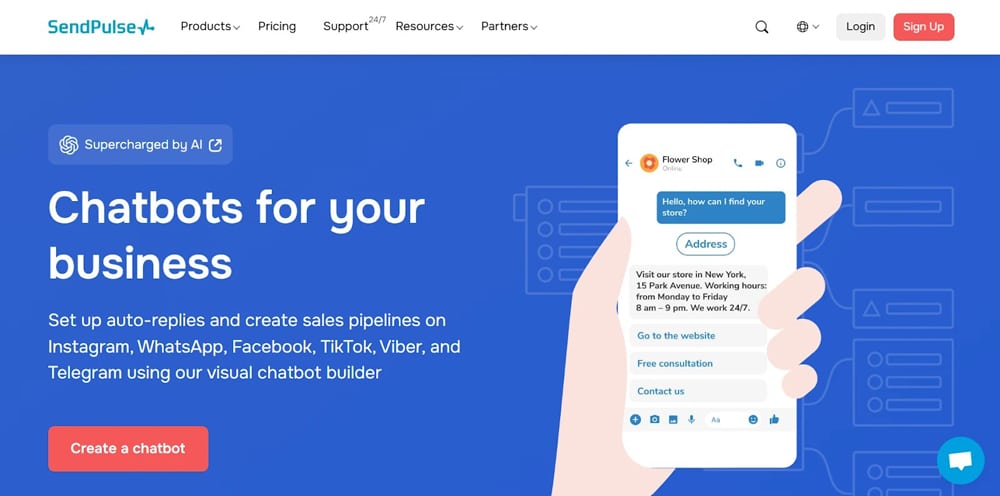
SendPulse stands out as an all-in-one, cloud-based marketing automation platform that integrates chatbots into a broader ecosystem of tools, including email, SMS, and push notifications. Designed for marketers and business owners who want a single interface for multichannel engagement, it provides chatbot creation for Instagram, Facebook Messenger, WhatsApp (as an official Business Solution Provider), Telegram, and even a chatbot for TikTok — making it one of the few platforms to support such an extensive range of communication channels.
Its free plan offers generous limits — up to three chatbots, 500 subscribers, and 10,000 messages — giving small businesses ample room to experiment before upgrading. Paid tiers start from $8/ 8/month for unlimited chatbots, messages, triggers, flows, variables, live chats, and advanced features. The visual flow builder is intuitive, featuring a true drag-and-drop interface with conditional logic, loops, and dynamic variables, enabling both beginners and experienced users to build responsive and personalized conversation paths.
For businesses focused on social media, SendPulse includes Instagram DM and comment automation, a valuable feature for managing engagement on brand accounts. The platform’s WhatsApp integration is official and compliant, with access to verified templates, delivery analytics, and tools for GDPR consent management. Broadcast messaging is channel-compliant, ensuring marketing campaigns respect platform rules.
Advanced features like segmentation based on attributes, behaviors, and events (such as cart abandonment or purchase completion) make automation more targeted. The inclusion of a unified inbox allows businesses to manage human and bot interactions in one place, ensuring smooth handovers between automated and live agents. Combined with a library of industry-specific templates, SendPulse is an accessible yet comprehensive solution that bridges the gap between marketing and customer support automation.
Overall, SendPulse offers an exceptionally balanced combination of usability, breadth of channels, and automation depth, making it an optimal choice for small and mid-sized organizations that value flexibility and integration.
2. Chatbase — AI-Driven Knowledge and FAQ Automation
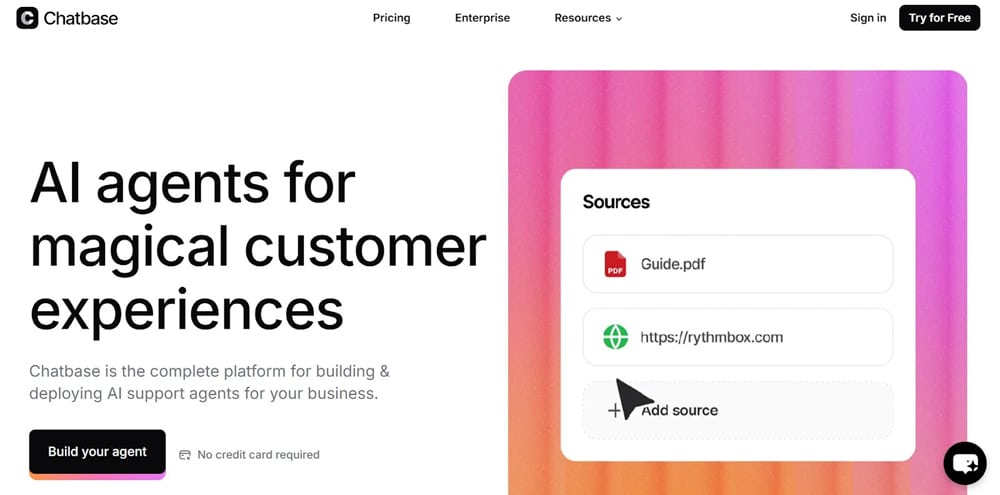
Chatbase takes a distinct approach to chatbot creation, focusing on knowledge automation rather than marketing flows. Instead of designing step-by-step conversations, users train the chatbot by uploading documents or connecting content sources such as FAQs, help articles, or policy pages. The system then uses natural language understanding to respond contextually to user queries.
The platform is suitable for businesses of all sizes because it offers a free tier. Chatbase’s free plan allows 100 message credits/month. Paid plans start at $32/month for 2,000 message credits. The chatbot builder is user-friendly, meaning that users with no experience can start using it without complications.
Channel support is primarily web-based, with a focus on embedding chat widgets on websites or web apps. There is no native integration with Instagram, WhatsApp, or Facebook Messenger, which makes it less ideal for businesses seeking cross-platform outreach. However, the simplicity of the interface and the ability to build a bot directly from existing content make it a strong option for internal help desks, FAQs, or support centers.
Chatbase lacks advanced segmentation and event-trigger capabilities but compensates with strong semantic matching and intent recognition, allowing it to handle a wide variety of user phrasing. The platform’s design favors efficiency and informational accuracy over marketing personalization.
In essence, Chatbase is a specialized solution: it’s most suitable for organizations that already have a rich knowledge base and want to convert it into a conversational assistant without needing to manually script flows. Check out the Chatbase guide on creating WhatsApp chatbots, which also mentions popular WhatsApp business solution providers like Twilo and SendPulse.
3. Chatfuel — Social Media Chatbots for Sales and Engagement
Chatfuel is one of the most established chatbot platforms for social media marketing, originally designed to simplify Facebook Messenger automation. Over time, it has expanded its focus to include Instagram DM automation and WhatsApp integration via partner APIs, making it a strong choice for small businesses and marketers who prioritize social platforms.
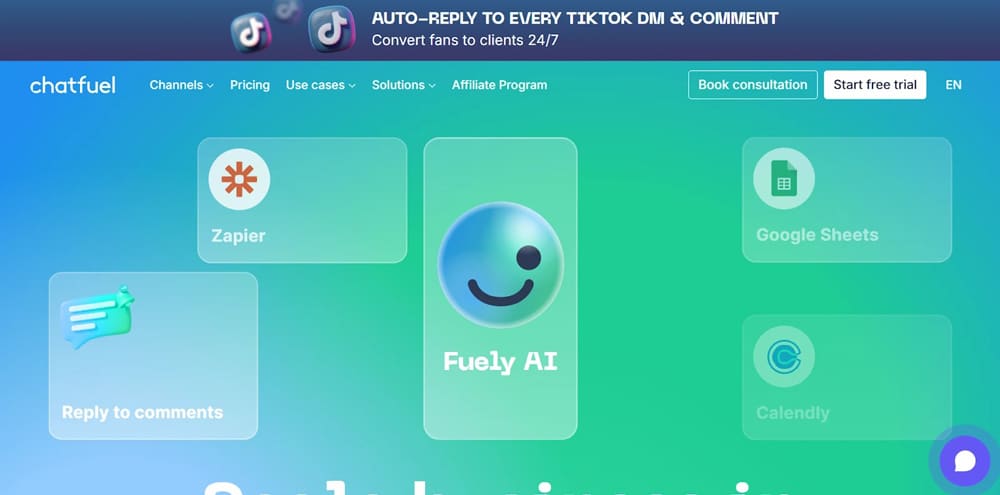
The platform offers a free trial , letting users test the service before making any decisions. Paid tiers unlock advanced features and 2,000 message credits for $32/month. Its primary marketing focus is conversational sales and lead nurturing, helping businesses capture interest directly within messaging channels.
Chatfuel’s visual builder allows users to create chat flows using a modular block system, where each block represents a conversation step or action. Chatfuel provides an intuitive way for beginners to build personalized journeys.
The platform supports rich UI elements such as buttons, quick replies, and product carousels—ideal for eCommerce chat interactions. Broadcast messaging is channel-compliant, and segmentation tools allow businesses to target users based on attributes or behavior. However, website chat widgets and unified inbox functionality are relatively limited compared to multichannel competitors.
With its template library covering lead generation, FAQs, and campaign automation, Chatfuel offers a focused and practical solution for businesses operating primarily on Facebook and Instagram. It’s a reliable entry point for social commerce without the technical overhead of enterprise tools.
4. Botsify — Flexible Automation for Education and Customer Support
Botsify is designed to help businesses and educational organizations build chatbots for customer support, lead management, and information dissemination. Its primary marketing focus lies in education, customer service, and lead qualification.
The platform supports multiple channels, including Facebook Messenger, website widgets, and partial integrations with Instagram and WhatsApp via partners. These options provide sufficient reach for most mid-sized businesses. Botsify lets users test the platform during its 14-day free trial. The cheapest paid plan will cost you $16/month for 1,000 messages.
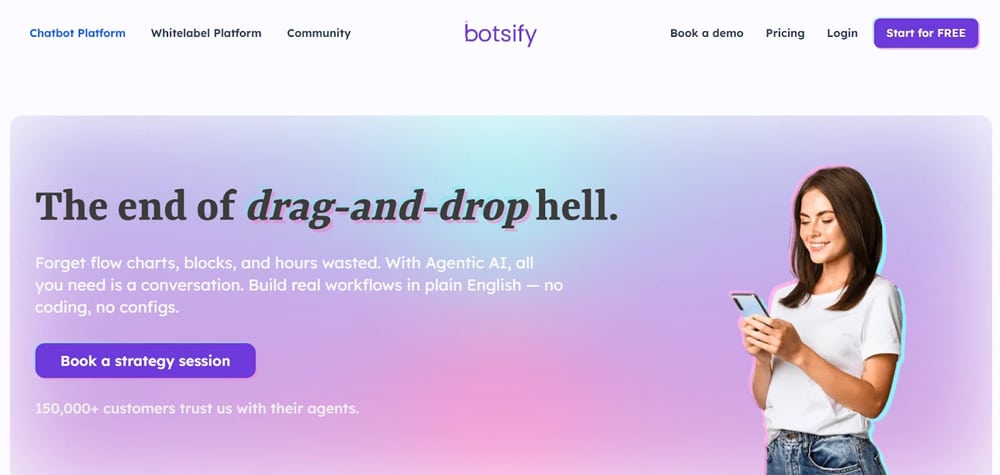
The visual builder is structured and user-friendly, allowing marketers to define conversation flows and conditions without coding. Botsify also supports rich UI components such as buttons and carousels, enabling interactive and visually engaging dialogues.
Automation depth includes event-based triggers and segmentation based on user responses or form data, which can guide customers toward the right department or sales team. The unified inbox feature ensures human agents can take over seamlessly when needed, creating a smooth transition between bot and live chat.
With template libraries covering education, retail, and customer service, Botsify helps users start quickly without designing workflows from scratch. Its blend of usability, functionality, and flexibility makes it a well-rounded option for support-oriented organizations.
5. Outgrow — Interactive Marketing through Conversational Experiences
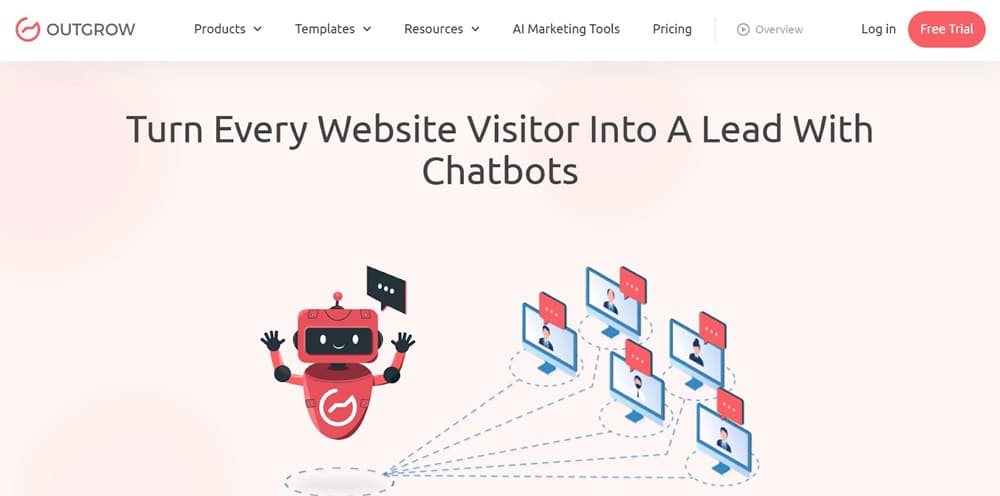
Outgrow approaches chatbot automation through the lens of interactive content marketing. Rather than traditional question-answer chatbots, it enables businesses to create quizzes, surveys, assessments, and calculators that simulate conversational interactions. The emphasis is on engaging users, collecting data, and generating leads rather than ongoing support conversations.
It offers a 14-day free trial, giving users time to explore its features before choosing a paid plan. Paid tiers start from $14/month for advanced analytics, more templates, and greater customization. The platform’s primary focus is on lead generation, and its visual builder is among the most sophisticated for non-programmatic users. Building interactive content involves assembling modular blocks that define the question flow, response logic, and output screens.
Outgrow supports website embedding and is oriented toward on-site and campaign-based use. It includes a rich interface with dynamic visuals, conditional logic, and tailored result displays, making it well-suited for marketing funnels.
Although Outgrow doesn’t offer real-time conversations or a unified inbox, it does provide advanced segmentation and data capture capabilities that integrate with CRMs and email tools. Its template library spans a wide range of industries — from finance calculators to eCommerce quizzes — allowing quick deployment of interactive assets.
For businesses aiming to attract leads through engagement rather than direct messaging, Outgrow provides a creative, data-driven approach that bridges the gap between content marketing and automation.
6. TARS — Conversion-Focused Conversational Landing Pages
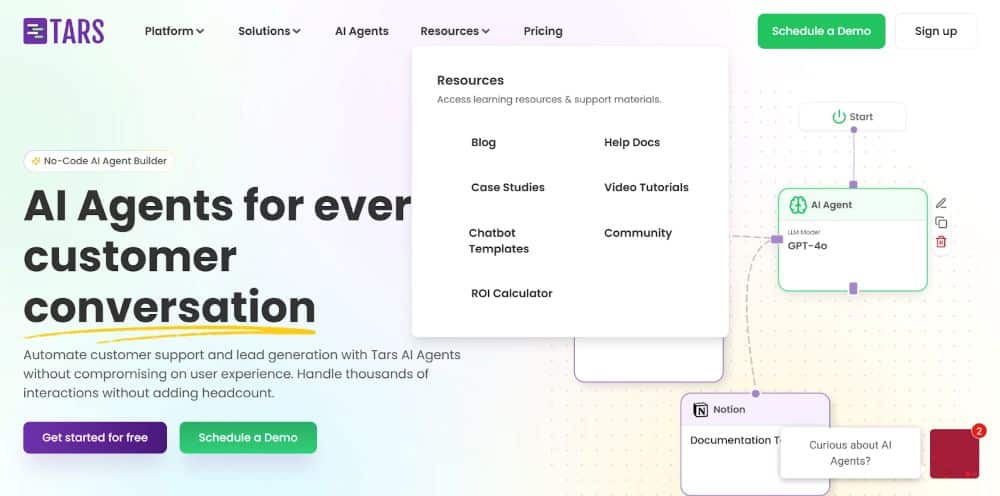
TARS pioneered the concept of “conversational landing pages,” where visitors interact with chatbots instead of filling out static forms. Its primary goal is to improve lead generation and conversion rates by making digital interactions feel more natural and personalized.
The platform offers a free tier allowing up to 50 monthly conversations, ideal for small projects or testing campaigns. Paid tiers start from $499/month for 500 conversations. TARS supports deployment via embedded website widgets or standalone chatbot pages, giving marketers flexibility in presentation.
Integration-wise, TARS supports Facebook Messenger and WhatsApp (through a partner integration), though not Instagram. The platform emphasizes performance and user experience, featuring rich UI elements, custom branding, and smooth message transitions.
Its visual flow builder is among the strongest in the market, offering a full drag-and-drop environment with analytics dashboards to track conversation performance. Users can create event triggers based on visitor behavior, integrate forms, and connect bots with CRM systems for lead follow-up.
TARS also includes industry-specific templates, covering verticals such as real estate, healthcare, and finance. Its unified inbox supports both automated and human-assisted chat, enabling direct intervention when necessary.
TARS is a focused tool: it’s less about multichannel automation and more about optimizing website and ad traffic conversions. For marketers prioritizing form replacement and engagement rates, it offers one of the most polished solutions available.
7. Tidio — Real-Time Chat Enhanced with Automation
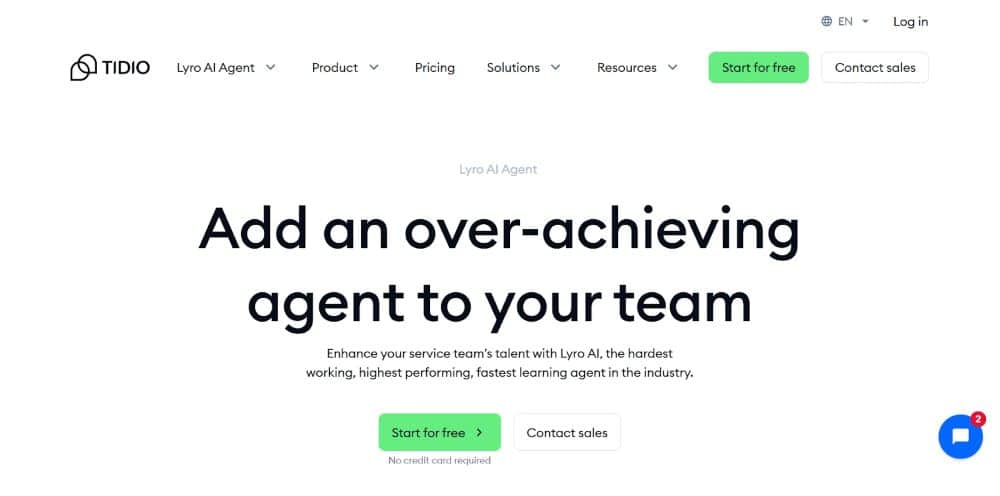
Tidio is an intuitive platform that allows businesses to create AI-powered chatbots for websites, e-commerce stores, and messaging apps—without any coding skills. It combines live chat and automation features to help companies engage visitors, answer common questions, and convert leads in real time.
Its free plan includes 50 live chats and 100 chatbot conversations per month. The cheapest paid tier starts from $25/month for 100 Lyro AI Agent conversations. With its drag-and-drop visual builder, users can easily design conversation flows, set triggers, and personalize responses based on customer behavior. Tidio also integrates with popular tools like Shopify, WordPress, and Mailchimp, making it a flexible solution for improving customer support and boosting sales through intelligent, automated conversations.
It’s a clean, modern chat widget that integrates directly into websites, helping businesses communicate instantly with visitors. While Instagram, WhatsApp, and Facebook Messenger integrations exist, they require third-party extensions, which can add complexity for beginners.
Tidio’s rich UI supports product cards, images, and call-to-action buttons. Its segmentation features are moderate but sufficient for small-scale personalization. A notable strength is its unified inbox, where live chat, chatbot interactions, and email messages converge — an efficient setup for small teams.
While Tidio may not provide advanced AI or official BSP status for messaging platforms, its combination of simplicity, live chat, and automation creates a balanced entry point for businesses that want to improve communication without heavy infrastructure.
8. Pypestream — Enterprise-Grade Conversational Infrastructure
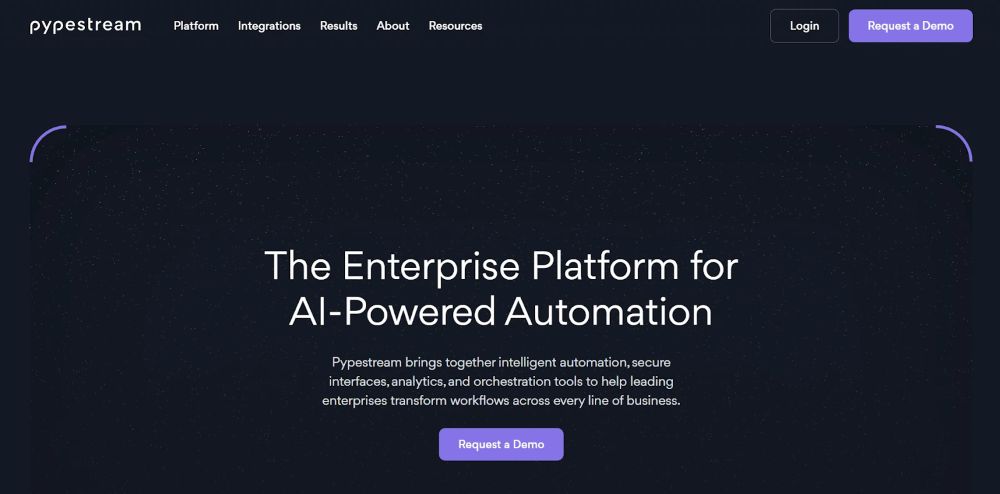
Pypestream is an enterprise-grade platform designed to help organizations create intelligent, automated customer engagement experiences. It enables businesses to build conversational interfaces, known as “Pypes,” that guide users through tasks like support requests, onboarding, and purchases.
The primary marketing focus is customer experience, automation, and process efficiency. Pypestream supports website chat widgets as well as multi-channel integration with Instagram, WhatsApp, and Facebook Messenger, all implemented through enterprise APIs and connectors.
The platform provides a free demo but doesn’t give a clear pricing. To know the details, you need to contact its customer support. The visual builder is advanced, combining conversational design with workflow logic, though it requires technical expertise to deploy. The platform’s rich UI accommodates multimedia, product carousels, and transactional modules. Event triggers can connect to external systems, allowing for highly personalized and data-driven communication flows.
Unlike smaller platforms, Pypestream excels in compliance and scalability. Its unified agent dashboard centralizes chat, email, and system interactions, while the template library includes vertical-specific solutions such as claims processing and account management.
For large organizations seeking robust security, analytics, and workflow integration, Pypestream is a capable, enterprise-level solution — albeit far beyond the scope or pricing of beginner-oriented tools.
Choosing the Right Chatbot Platform for Your Business Goals
Each chatbot builder examined here serves a unique purpose. Chatbase provides AI-driven FAQ automation for reducing support load, while Chatfuel empowers marketers to build effective Facebook and Instagram chatbots without coding. Botsify offers flexibility for education and service automation, and Outgrow enables interactive, lead-generating campaigns. TARS focuses on conversion-oriented website experiences, Tidio combines live chat with automation for smaller businesses, and Pypestream provides large-scale, enterprise-grade solutions.
Taken together, these platforms demonstrate the wide range of chatbot technologies now available — from simple drag-and-drop tools to enterprise automation frameworks. SendPulse distinguishes itself by integrating multiple channels, including newer platforms like TikTok, with an accessible visual builder and unified inbox. Yet the ideal choice ultimately depends on business goals: whether streamlining support, automating marketing, or building rich, interactive customer journeys, each of these tools offers a meaningful path toward smarter digital engagement.
To maximize the benefits of chatbot technology, explore the tools that best suit your business needs and apply the insights shared. With the right platform and strategy, you can boost engagement, streamline support, and achieve meaningful growth through automation.






Leave A Comment