

More has changed in logistics in the past 5 years than in the previous 50.
AI is why. Where businesses once relied upon spreadsheets, gut instinct, and clipboard-toting warehouse managers, AI can forecast demand, track packages in real-time, and reroute trucks before traffic congests. Entry cost has never been lower – even small and medium-sized businesses have access to tools that were once only available to the Amazons and Walmarts.
Here’s how AI is reshaping logistics right now.
Here’s What’s Covered:
- The Rise of the Data-Driven Supply Chain
- Real-Time Tracking and Visibility
- Smarter Route Optimization
- Warehouse Automation and Robotics
- What AI Means for the Future of Logistics
The Rise of the Data-Driven Supply Chain
The modern supply chain runs on data.
Lots of it.
From trucks to sensors to warehouses to online orders: everything creates data that AI can analyze to improve decision-making. When supply chains are fully data-driven, they connect all those sources of information and translate them into action. Whether that’s automatically replenishing inventory, optimizing shipment routes, or identifying late deliveries before they become an issue.
This is where quality AI solutions for supply chain planning shine. They input historical sales data, market trends, lead times, and seasonality to predict precisely how much inventory is required and when – eliminating guesswork.
The benefits are massive:
- Fewer stockouts (and lost sales)
- Less cash tied up in overstock
- Faster reaction to demand changes
- Better cash flow and budgeting
McKinsey found AI-powered distribution operations can result in 5-20% savings in logistics costs and 20-30% less inventory.
Pretty impressive numbers, right?
These are not projected savings. They are dollars that businesses are saving today. And this pace is picking up. AI is transforming the industry, and businesses that fail to adopt AI technology are rapidly falling behind their data-forward competitors.
Real-Time Tracking and Visibility
Remember when “tracking” your package meant a single update that said, “in transit”?
Those days are gone.
Today’s AI-driven tracking solutions harvest information from GPS systems, IoT sensors, weather feeds, and traffic updates to provide near real-time status on the location of goods. Even more useful, artificial intelligence can anticipate delays before they occur.
Here’s how it works in practice:
An inventory truck driving down I-95 encounters unforeseen traffic. Old tech would have only alerted you when the driver was already behind schedule. Predictive AI notices the traffic jam, recalculates the route, and automatically adjusts the customer’s estimated delivery time. The customer doesn’t even realize there was an issue.
This kind of visibility matters because:
- Customers stay informed and happy
- Warehouse teams can plan for early or late arrivals
- Lost or damaged shipments get spotted faster
- Insurance claims become easier to process
Visibility once was a “nice to have” feature. Today, it’s the least you should expect from a forward-thinking logistics provider.
All that tracking information also goes back into the AI – so the longer it runs, the smarter it gets.
Smarter Route Optimization
Fuel is one of the highest costs in logistics.
The last mile of delivery – when the package moves from the local warehouse to your door – costs more than any other part of its journey. Route optimization powered by AI can cut both costs by massive percentages.
Here’s how AI does it:
The system looks at hundreds of variables at the same time:
- Current traffic conditions
- Weather forecasts
- Delivery windows
- Vehicle capacity
- Driver hours
- Fuel prices
Then it optimizes that to create the most efficient route possible. As conditions change during the day, that route is adjusted in real-time by the AI. No phone calls, no paper maps, and no frantic dispatchers yelling into radios.
A prime example of routing at scale is Amazon. They’ve been optimizing their AI-powered routing and warehousing for years, and have created the customer expectation of overnight delivery that every other competitor is scrambling to keep up with.
Warehouse Automation and Robotics
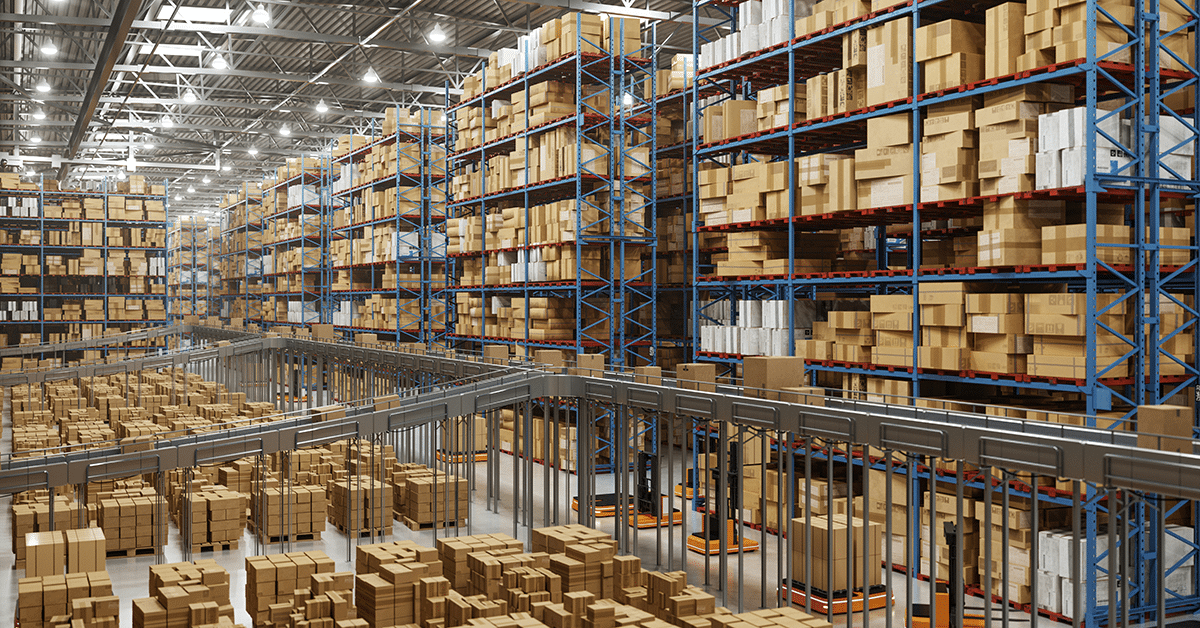
Walk into a modern warehouse, and you won’t see what you expect.
Replace rows of humans grabbing items off shelves with AI robots whizzing around autonomously picking, sorting, and packing at blistering speeds.
These warehouse robots can:
- Work 24/7 with no breaks
- Lift heavy loads safely
- Pick items with near-perfect accuracy
- Learn the warehouse layout and optimize their own paths
This is no longer science fiction. Walmart announced that AI and automation have enabled their distribution centers to nearly double capacity and now serve 95% of US households with same-day delivery.
That’s the kind of edge AI gives the big players…
Smaller logistics firms are starting to close the gap on large players now that inexpensive warehouse robots and cloud-based AI platforms are available. Software that might have cost millions just a few years ago can now be leased for hundreds of dollars per month.
That changes the game completely.
What AI Means for the Future of Logistics
So where is this all heading?
In short, everywhere.
Artificial intelligence is expanding in the logistics industry from “a few select departments” to “every part of the business” at modern companies. In the next 5 years, the industry will see:
- Fully autonomous delivery vehicles and drones
- AI agents that run entire shipping operations on their own
- Predictive supply chain planning that adjusts itself
- Sustainability tracking that lowers carbon emissions automatically
- Smarter customs and trade compliance tools
Those companies that anticipate these trends will lead the pack. Those that don’t will be chasing their tails for years to come.
History repeats itself with every major business revolution. First movers win the largest prize.
Where to Start With AI in Your Logistics Operation
Artificial Intelligence has evolved from being a “nice to have” technology for logistics companies to being the backbone of every modern, competitive supply chain. The evidence is compelling, and the cost savings are tangible.
To recap what AI is doing in logistics right now:
- Tracking goods in real-time with predictive alerts
- Forecasting demand to keep inventory levels just right
- Optimizing routes to slash fuel and labor costs
- Automating warehouses with smart robotics
- Spotting risks in the supply chain before they cause damage
The best part is that it has never been easier to get started. There are tools, platforms, and providers that cater to all different sizes and budgets of businesses. Entry-level has been greatly reduced in recent years – something that used to cost millions of dollars can now be done for just a small fraction of the cost.
Find one weak link in your logistics chain. Start there. Grow out. Early adapters will clean up.
AI has moved from an optional upgrade to the backbone of competitive logistics, and the entry cost keeps falling. The smartest move isn’t a full overhaul. Find one weak link in your chain, start there, and expand as the gains prove themselves.





Leave A Comment