
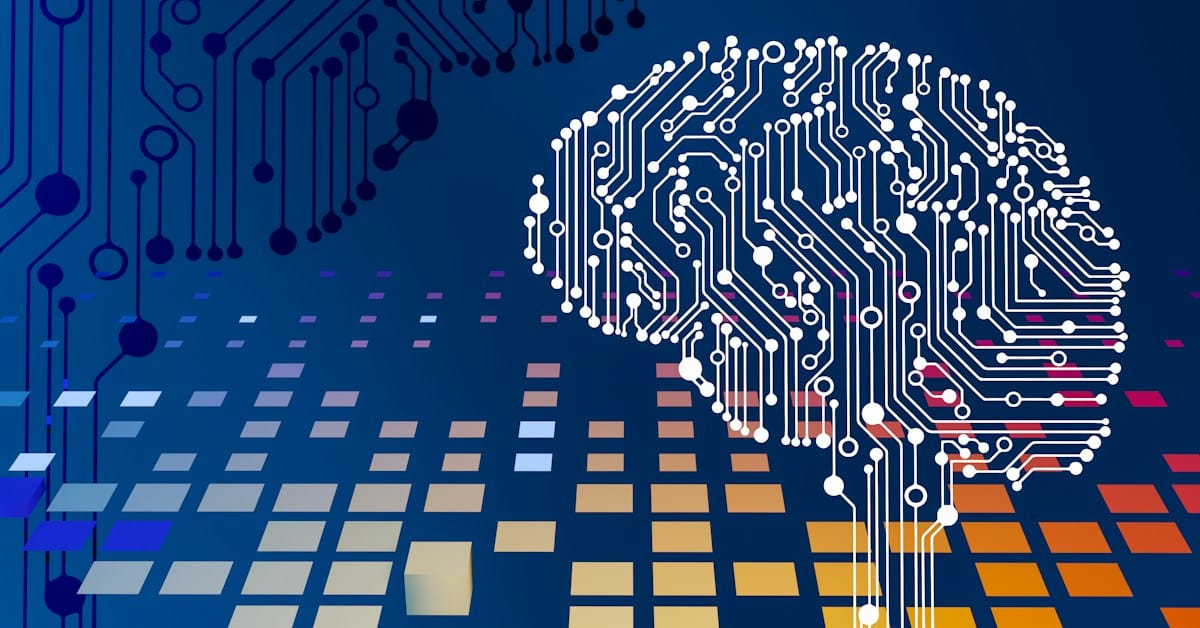
Artificial general intelligence is AI that can handle almost any intellectual task a person can, including ones it was never trained for. It matters because whoever credibly claims it gets to rewrite the rules on jobs, money and safety. And the honest answer to “how close are we” depends entirely on which finish line you’re watching.
Key Takeaways
- Artificial general intelligence has no single agreed definition, so every arrival date quietly assumes one particular test.
- Language models feel broad because of massive training, yet their weights usually stay frozen once that training ends.
- On ARC-AGI-3 at max reasoning, GPT-6.2 Astra scored 70.3% in the standard harness and 99.8% with persistent reasoning state.
- Surveyed AI researchers expect machines to beat humans at tasks decades before they can automate every occupation.
- Scaffolding that adds memory to models closes real gaps, blurring the line between a model and a system.
What Is Artificial General Intelligence, and How Close Are We?
Artificial general intelligence, or AGI, is the long-promised AI that doesn’t need a new product team for every new job. Today’s chatbots write code, draft contracts and explain tax law, which already sounds pretty general.
It isn’t, quite.
Here’s the distinction most coverage skips: knowing a lot is not the same as learning anything. A model trained on most of the public internet arrives broad, the way an encyclopedia is broad. General intelligence is the ability to face something no training data covered, work it out, and keep what you worked out.
Breadth is what a model brings to the conversation. Generality is what it walks away with.
So how close are we? Closer than the skeptics of 2023 expected, further than the launch keynotes imply, and the clearest remaining gap sits somewhere surprisingly unglamorous: memory. Every AGI headline is really a claim about one specific test, and knowing which test tells you whether to shrug or pay attention.
Why Does Today’s AI Feel General When It Isn’t?
The answer is in how large language models are built. They’re trained once on an enormous pile of text, then their weights (the billions of internal numbers that store what the model learned) are frozen. Anything that looks like learning afterward happens inside the conversation, and it evaporates when the session ends unless an outside system saves it.
That’s why ChatGPT changed public perception in a way earlier AI never managed. Deep Blue played chess and AlphaGo played Go, but ChatGPT would talk about anything, and from the outside, breadth looks exactly like generality.
Look inside and the profile gets lumpy. When A Definition of AGI, a framework from a group led by Dan Hendrycks with coauthors including Yoshua Bengio and Gary Marcus, scored models on the cognitive test batteries psychologists use on people, GPT-4 reached 27% and GPT-5 reached 57%. The authors called the profile “jagged,” strong on knowledge with critical deficits in long-term memory storage.
Picture a brilliant consultant with amnesia: dazzling in the meeting, a stranger again the next morning. Enormously useful, and not yet general. For you, it means what a chatbot knows is impressive, while what it remembers about working with you depends on the product wrapped around it.
If you want the plumbing of how a model turns your prompt into an answer, our explainer on how AI makes decisions walks through it.
The Three Finish Lines of Artificial General Intelligence
Nobody agrees on a date partly because people are racing toward different lines. We sort the serious definitions into three, and we call them the Three Finish Lines: Know, Learn and Work.
The Know line asks whether AI matches a well-educated adult across ten cognitive domains, which is the Hendrycks standard. The Learn line asks whether it can pick up any new skill as efficiently as a person, which is exactly how ARC Prize defines AGI. The Work line is the commercial one, written into the OpenAI Charter as “highly autonomous systems that outperform humans at most economically valuable work.”
| Finish line | Who draws it | What it tests | Where AI stands, November 2026 |
|---|---|---|---|
| Know | Hendrycks and coauthors | Breadth across ten cognitive domains | Strong on knowledge, weakest on long-term memory |
| Learn | ARC Prize | Acquiring new skills as efficiently as humans | Cleared ARC-AGI-3 only with provider memory tools |
| Work | OpenAI Charter | Beating humans at most economically valuable work | Experts expect full job automation decades after task parity |
The lines aren’t ranked, and crossing one doesn’t drag the others along. Google DeepMind researchers, cofounder Shane Legg among them, have pushed the same instinct further by proposing levels of AGI instead of a single yes-or-no moment.
Next time a CEO says AGI is two years away, ask which line. The answer usually tells you more about the business model than the technology.
How Close Is AI to Artificial General Intelligence Right Now?
The Learn line used to be the academic one, the test you could ignore while chatbots got better at exams. That changed once AI agents started doing multistep work on their own, because an agent that can’t learn on the job has to be hand-held through every new situation.
ARC-AGI-3, launched in March 2026, drops AI agents into small game worlds with no instructions, no rules and no stated goal, and humans can solve every one of them. On November 17, GPT-6.2 Astra’s verified results showed OpenAI’s model, at max reasoning, scoring 70.3% in ARC’s standard harness (the software wrapper that connects a model to the test), where the model decides which notes to carry forward, and 99.8% in the Provider Adapter harness, which preserves its hidden reasoning state between steps.
Same model, same games, same reasoning setting. The difference between 70% and nearly 100% was memory.
When the earlier GPT-6 Astra posted near-perfect scores in September, ARC Prize wrote plainly that it was “not claiming that it is AGI,” and pointed out that its games have closed, deterministic rules unlike the messy real world. We think that’s the right call and the most honest progress report in the field: AI can now learn a new world inside a single session, and the open question is continual learning (skills that persist and compound after the session ends).
For you, that becomes a concrete test. Watch whether your AI tools get better at your particular work the longer they do it, without anyone retraining them.
Why Experts Can’t Agree on an AGI Date
Ask when AGI arrives and the answer depends on which line the forecaster is watching, which is why serious timelines run from a few years out to the next century.
The clearest proof comes from a single study. In the AI Impacts survey of 2,778 published AI researchers, respondents gave even odds that machines outperform humans at every possible task by 2047, but even odds that every human occupation becomes fully automatable only by 2116.
Same experts, same survey, a 69-year gap between doing tasks and doing jobs.
Business definitions are slipperier still. In October 2025, OpenAI and Microsoft agreed that an independent expert panel would verify any AGI declaration, and by April 2026 Microsoft’s announcement of an amended deal said revenue share payments continue through 2030 “independent of OpenAI’s technology progress.” An AGI date, in other words, is a definition wearing a calendar costume.
The useful habit is to translate every forecast into its finish line before deciding how worried or excited to be.
Does It Matter Whether AI Really Learns If It Does the Work?
The strongest objection to everything above is blunt: if a system writes the code, closes the tickets and files the report, who cares whether it “really” learns? That’s essentially the Work line, and it’s a fair challenge.
We’ll concede it where it holds. For a freelancer automating invoices or a company running coding agents, a scaffold that bolts memory onto a model is as good as memory inside the model, and the ARC results show scaffolds closing real gaps.
Where it breaks is the unscripted part of work, which is most of it. The client who changes their mind, the process that changed last Tuesday, the unwritten rule everyone just knows: a system that can’t fold those lessons in stays a very fast temp rather than a colleague.
The physical world is a further test that none of the three lines fully covers. The humanoid robot companies now putting machines on factory floors make a useful reality check on AGI claims made from inside a chat window.
Jargon Translator
Weights: The billions of numbers inside a model that store everything it learned in training. In most products today they’re frozen after launch, which is why chatbots don’t get smarter from talking with you.
Harness: The software wrapper that connects a model to a task, deciding what it sees, what tools it gets and what it can remember. Same model, different harness, very different scores.
Jagged intelligence: A capability profile with towering peaks and sudden pits, like acing a law exam while forgetting yesterday’s conversation. It’s why single benchmark scores mislead so reliably.
Continual learning: The ability to keep acquiring skills after training ends, with lessons that persist and build on each other. It’s the piece most researchers point to as missing from today’s systems.
FAQs About Artificial General Intelligence
We’re genuinely thrilled by how fast the Know and Learn lines are falling. Still, we’d trust one tell over any keynote: AGI arrives when an AI gets better at your work by doing it, and remembers why. Until then, we’re working with the most brilliant forgetful colleague ever built, and that’s already a lot.



Leave A Comment