
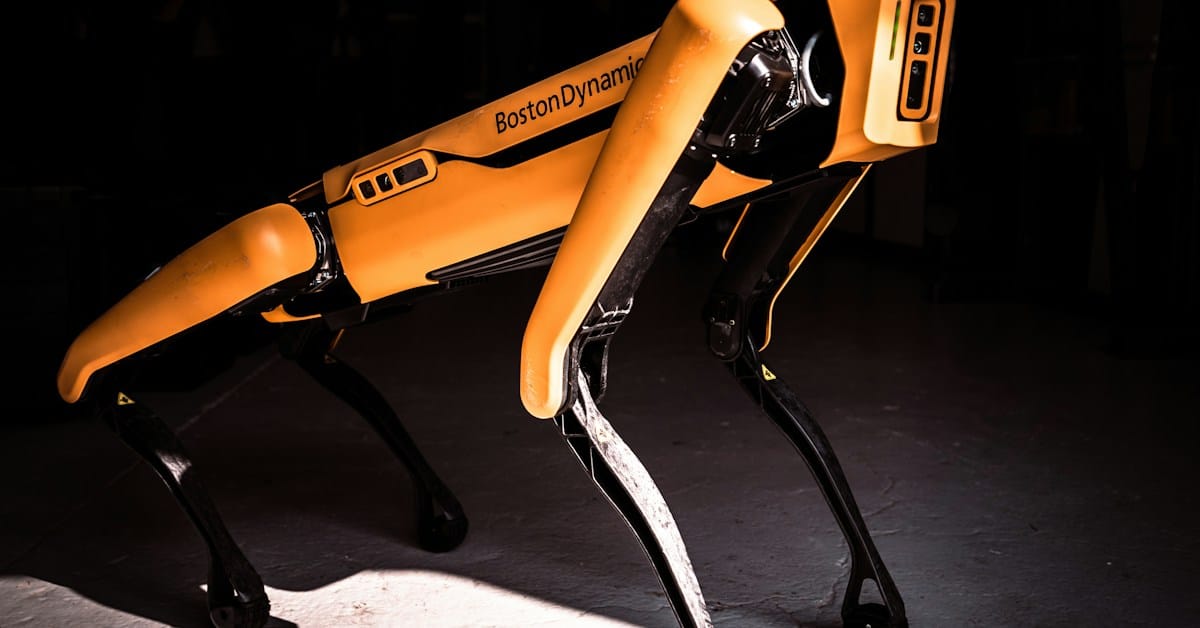
A robot dog is a machine with four legs that carries cameras and sensors into places people can’t easily or safely go, then walks the same route again and again. It matters because the viral clips sell agility while paying customers buy repetition, and that gap shapes everything from factory budgets to police policy.
Key Takeaways
- Four legs let robots climb stairs and cross grating in buildings designed around human bodies rather than wheels.
- Whatever is mounted on the robot’s back, a thermal camera, gas sensor or rifle, defines what the machine really is.
- Industrial value comes from consistency, the same gauge photographed from the same angle on every scheduled round.
- Today’s autonomy mostly means replaying a recorded route and docking to recharge, while people still decide what gets fixed.
- A consumer robot dog is a programmable platform for tinkerers and students, not a working dog or a pet.
Robot Dogs and What They Actually Do Beyond the Viral Videos
You’ve seen the clips. Spot dancing to “Uptown Funk,” a Unitree dog rearing up on its hind legs, a yellow robot getting shoved by an engineer just to prove it won’t fall over.
Now meet the job that actually pays. At National Grid’s Sandy Pond substation, a Spot robot walks into a valve hall five stories tall where 450,000 volts of direct current gets converted to alternating current, a room people aren’t allowed into while it runs. Before Spot, inspecting it meant shutting the hall down and waiting hours for it to restart.
No backflip required. The robot walks in, points a zoom camera and a thermal camera at the same equipment it checked last time, and sends the images back to people standing safely outside.
A viral video proves a robot dog can do something once, and the job is doing it for the thousandth time.
That split between performing and repeating explains almost everything about this category. It tells you who buys these machines, why the boring deployments succeed, and why a few of the exciting ones make people deeply uncomfortable.
Why Does a Robot Dog Need Legs at All?
Because the places worth inspecting were built for people. Refineries, breweries and power plants are full of steel stairs, raised grating and pipe runs that a wheeled robot can’t cross without someone installing ramps first.
Legs let a robot plug into human architecture without renovating the building. That’s the same bet the humanoid robot companies are making with two legs and two arms, though four legs buy a lot more stability for a lot less drama.
Explosive atmospheres show how far that logic goes. Plants handling flammable gas ban any device that might spark, so ANYbotics spent four years making a robot ex-proof (certified unable to ignite a flammable atmosphere), and its ANYmal X began shipping in October 2026 to Equinor and DSM-Firmenich as what the company calls the first legged robot built for those zones.
So treat the legs as the entry ticket, not the product. A robot dog that reaches a place but carries nothing useful is just a very expensive way to climb stairs.
Legs, Load, Loop: A Better Way to Judge Any Robot Dog
We use a simple test with three parts for any robot dog deployment. Legs are where it can go, load is the payload (the sensors or tools bolted onto its back), and loop is what it repeats on a schedule.
Most coverage stops at legs, because legs make great video. The money lives in the loop.
Here’s why. A human inspector photographs a gauge from a slightly different angle each time, at a slightly different hour, and skips the round entirely when an urgent repair pulls them away. A robot repeats the same route, stops at the same spot, and frames the same shot, so anything that changes stands out against a clean baseline.
At AB InBev’s Leuven brewery, Spot’s routine thermal and acoustic rounds cut average repair times from a few months to 13 days within its first six months. Nobody filmed that for social media. It’s still the most impressive thing in this article.
In a factory, a robot dog is a clipboard with legs, and the clipboard is the part that pays.
| Deployment | Legs: where it goes | Load: what it carries | Loop: what it repeats |
|---|---|---|---|
| AB InBev brewery, Leuven | Packaging lines and plant floors | Thermal camera, acoustic imager | Scheduled machinery and air leak checks |
| National Grid, Sandy Pond | Energized valve hall | Zoom camera, thermal camera | Visual and thermal inspections without a shutdown |
| ANYmal X, oil and chemical plants | Explosive gas zones | Visual, thermal, acoustic and gas sensors | Routine inspection rounds |
| Massachusetts State Police, “Roscoe” | Inside a house with an armed suspect | Cameras, driven remotely | None, a single emergency mission |
Notice the odd one out. Where there’s no loop, a person is making live decisions through the robot, and that’s exactly where the arguments start.
How Smart Is a Robot Dog, Really?
Smarter than it looks at walking, less clever than the videos imply at everything else. In Boston Dynamics’ Autowalk system (record a route once, replay it on demand), an operator drives Spot around a site a single time, marking where to stop and what to capture, and the robot repeats that mission on its own while adjusting for obstacles in its path.
The battery explains the rest. Boston Dynamics’ Spot specifications list an average runtime of 90 minutes, so a working robot dog lives on a schedule of short patrols and trips back to its charging dock, which matters far more to a plant manager than any dance routine.
The robot doesn’t know the pump is failing. It knows this thermal image doesn’t match last Tuesday’s, and right now that comparison, not judgment, is the intelligence you’re paying for.
That modest kind of smarts matters more today than it did a few years ago, because the AI layered on top keeps improving at reading gauges and flagging anomalies across whole facilities. If you want the mechanics behind that pattern matching, our explainer on how AI makes decisions goes deeper. Deciding what to fix, and when, still sits with people.
Why Do Police Robot Dogs Make People Uneasy?
Here’s the strongest objection to everything above. If the load defines the machine, then a load can be a weapon, and the same legs that carry a thermal camera through a brewery can carry a rifle somewhere else.
That isn’t hypothetical. In 2024, U.S. Marine Forces Special Operations Command was testing Ghost Robotics dogs fitted with Onyx Industries’ remote weapon system, which uses AI to pick out potential targets before a human approves firing. Boston Dynamics and several rivals have publicly pledged not to weaponize their general purpose robots, but a pledge only binds the people who signed it.
Police use cuts both ways. Most of it runs on teleoperation (driven remotely by a person), and in March 2024 a Massachusetts State Police Spot named Roscoe was shot three times by a barricaded suspect in Barnstable, a case state police hold up as proof the technology can keep officers out of the line of fire.
Our read: the unease is aimed at the right target, just at the wrong part of the animal. The legs aren’t the risk, and banning a body shape won’t help. Rules about what can be mounted on a robot, and who gets to steer it, will.
Should You Buy a Robot Dog for Your Home?
Only if you want a project rather than a pet. Unitree’s Go2 starts at $1,600 on its official store, a fraction of what enterprise buyers pay for a configured Spot, and it’s a genuinely capable walker with lidar and app control.
Apply the same test, though. At home you get the legs and a modest load, but no loop unless you write one, which makes the Go2 a terrific platform for students, hobbyist developers and creators filming robot content, and a disappointing companion for everyone else.
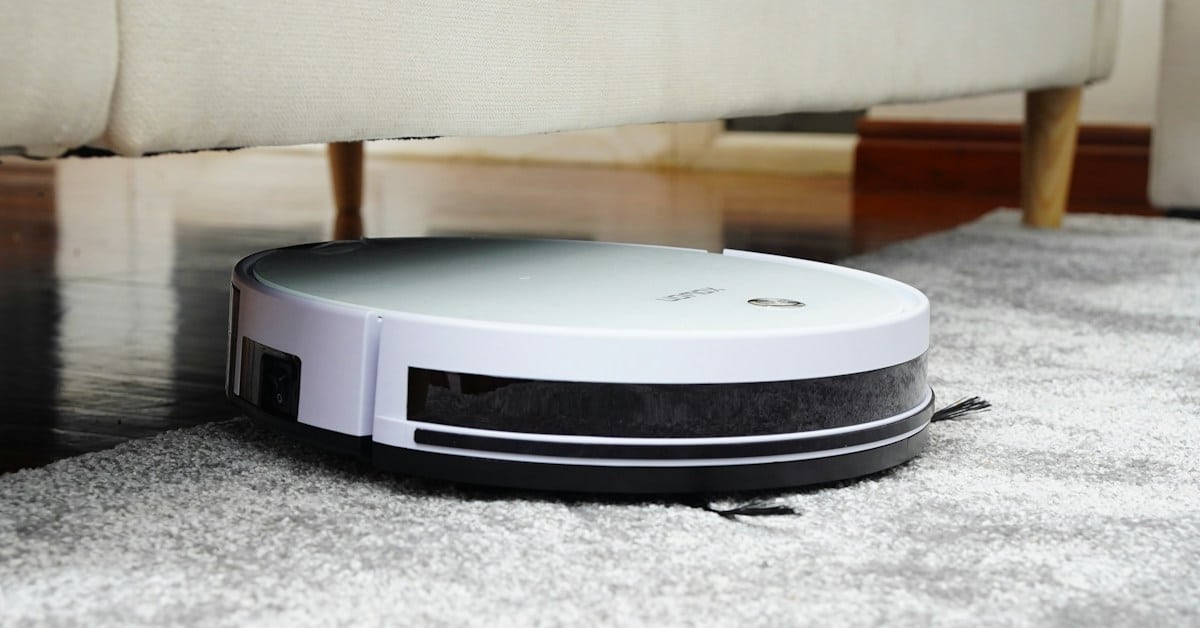
Solo professionals land in the same place. A freelance developer can build real skills on the Go2 EDU version and its software development kit, while an inspection consultant is better served by partnering with a firm that already runs the robots. And if what you actually want is a home robot with a dependable loop, the humble robot vacuum cleaner has been quietly doing that job for years.
Jargon Translator
Payload: Whatever gets bolted onto the robot’s back, from thermal cameras to gas sensors to robotic arms. The payload decides what job a robot dog does, which makes it the most important spec nobody puts in the video.
Ex-proof: Short for explosion protected. The device is independently certified so it can’t ignite a flammable atmosphere, even when a part fails, which is the price of admission for oil, gas and chemical plants.
Autowalk: Boston Dynamics’ system for teaching Spot a route once, then letting it repeat that mission on its own. Think of it as cruise control for inspection rounds, with stops built in.
Teleoperation: Controlling a robot remotely, usually with a tablet or joystick and a live video feed. Most police robot dog work happens this way, which keeps a human responsible for every move.
FAQs About Robot Dogs
The robot dog’s real trick was never the backflip. It’s patience: the same walk, the same gauge, the same photo, until the day something looks different. Judge these machines by their loop and their load rather than their legs, and you’ll know which ones deserve a job and which ones deserve a hard question.
Leave A Comment