
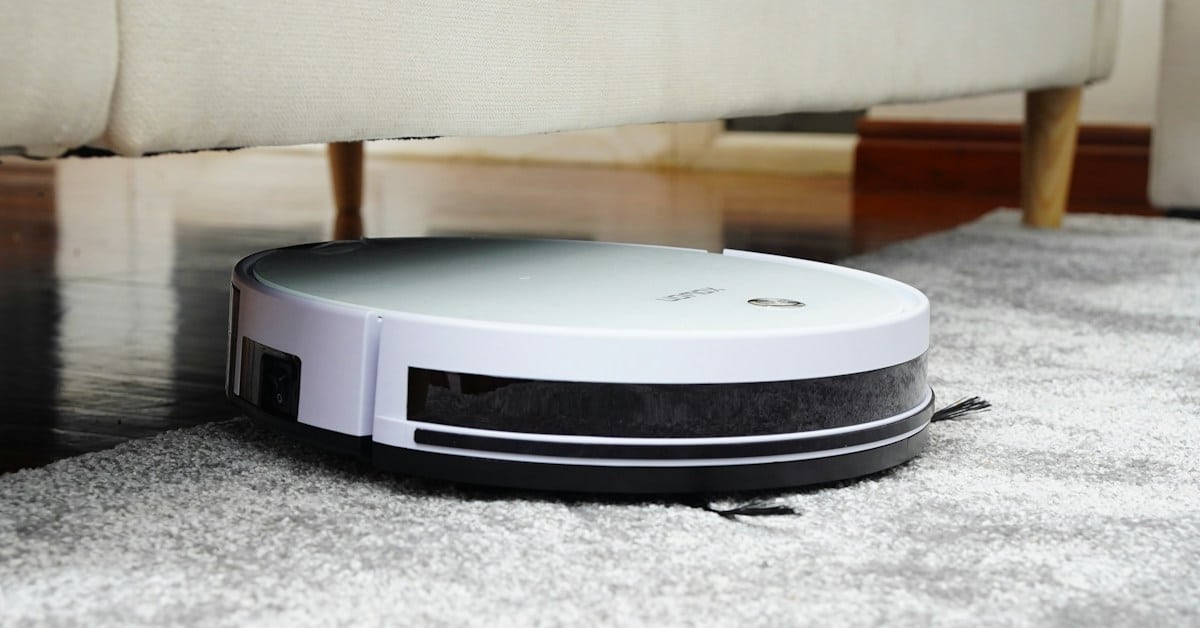
A robot vacuum cleaner is a small, self-driving appliance that maps your home, sweeps it on a schedule, and increasingly mops and empties itself too. Choosing one well matters because the real gap between models isn’t how hard they suck, it’s how often they drag you back into the chore you bought them to escape.
Key Takeaways
- A robot’s advertised pascal rating is a poor guide to how much dirt it actually lifts.
- Camera systems paired with 3D sensors dodge far more socks and cables than laser navigation alone.
- Full-service docks that wash, dry, and refill mop pads turn daily chores into occasional check-ins.
- The cameras that help a robot avoid mess put a lens on your floor, so data handling matters.
- Cloud-dependent features can disappear if a maker folds, as Neato owners learned when app control ended.
- Best Robot Vacuum Cleaners and What Actually Matters Before You Buy
- Why Doesn’t Suction Power Tell You Which Robot Vacuum Cleaner Is Best?
- How Do Robot Vacuums Avoid Socks, Cables, and Pet Mess?
- The 7 Best Robot Vacuum Cleaners Ranked by How Little They Need You
- Is a Camera Robot Vacuum a Privacy Risk?
- What Happens to Your Robot Vacuum If the Company Goes Under?
- When Paying Less Is the Smarter Move
- FAQs About Robot Vacuum Cleaners
Best Robot Vacuum Cleaners and What Actually Matters Before You Buy
Every robot vacuum box shouts the same thing: a suction number with a lot of zeros. We think that number answers the wrong question. Once a robot clears a fairly modest cleaning bar, what separates a great one from a closet ornament is how often it needs a human.
Call it the Babysitting Tax. Every robot vacuum cleaner charges it, and the bill comes in four line items:
- Rescues: freeing it from a phone cable, a sock, or a brush roll mummified in hair.
- Chores: emptying the bin, rinsing and drying mop pads, topping up water.
- Detours: rooms it never reaches because of a tall threshold or a low sofa.
- Trust: what its cameras see, where its maps live, and whether its app outlives the company.
Hair alone shows how steep the first line can get. In Vacuum Wars’ seven-inch hair test, the average robot finished with a 26 percent tangle rate, which in a home with a long-haired dog or human means regular dates with a pair of scissors.
Past a basic cleaning bar, the best robot vacuum is the one you think about least.
That’s the lens for everything below. We grade each robot by the tax it cuts hardest and the tax you’ll still pay, because no model on sale today zeroes out all four.
Why Doesn’t Suction Power Tell You Which Robot Vacuum Cleaner Is Best?
Suction ratings in pascals (Pa, a unit of pressure) describe what a motor can pull under the maker’s own test conditions. Your floor doesn’t care about the motor in isolation. Pickup depends on the whole chain: how well the brush agitates carpet, how tightly the cleaning head seals against the floor, how freely air moves through the bin, and whether the robot actually drives over the dirt.
The Roborock Qrevo Edge 3 Pro is the cleanest illustration we’ve found. Roborock rates it at 36,000 Pa, yet Vacuum Wars measured 0.63 kPa of suction at the intake, below the 0.99 kPa average of its test pool. The two figures aren’t measured the same way, which is exactly the point: the number on the box isn’t the number your floor feels.
That low reading didn’t stop the robot from pulling 93 percent of embedded sand out of carpet in the same review. Brush design did the heavy lifting the spec sheet takes credit for, and split rollers with a gap in the middle, like Roborock’s DuoDivide and Dreame’s HyperStream, are the design Vacuum Wars keeps seeing ace its hair-wrap tests.
The number on the box measures the motor. The number that matters measures you: how many times a week you bend down to fix something.
So treat pascals as a tiebreaker at best. If two robots share similar brushes, sensors, and docks, let the bigger figure win, but never let it be the reason you pick one.
How Do Robot Vacuums Avoid Socks, Cables, and Pet Mess?
Most robots navigate with LiDAR (a spinning laser that measures distance to walls and furniture), which is superb at drawing a floor plan and hopeless at spotting a sock. The laser sweeps a flat plane at turret height, so anything lying on the floor sits below its line of sight. That’s how a robot can map your apartment to the centimeter and still eat a phone charger.
Obstacle avoidance is a separate system on the robot’s nose. Structured light (a projected laser pattern whose distortion reveals 3D shape) tells the robot that something is there, while a camera paired with an onboard recognition model guesses what that something is, and that guess decides whether it gives a cable a wide berth or nudges past a chair leg.
If you’ve ever wondered how AI makes decisions like that, it’s the same score-and-threshold logic, running on a machine that lives at ankle height.
The hardware gap is enormous. Robots relying on a single-line laser avoided an average of 3.6 out of 24 objects in Vacuum Wars’ obstacle evaluation, while systems pairing their sensors with two cameras averaged 20.1.
For a tidy home with bare floors, that gap barely matters. For a home with a toddler, a puppy, or a cable-draped desk, it’s the difference between a robot that runs while you’re out and one you only dare start while you’re watching.
The 7 Best Robot Vacuum Cleaners Ranked by How Little They Need You
Every pick below cleans well enough to earn its place. The ranking reflects how much of the Babysitting Tax each one cancels, and the table shows where each still sends you a bill.
| Robot | Tax it cuts hardest | Tax you still pay | Best for |
|---|---|---|---|
| Roborock Qrevo Edge 3 Pro | Chores | Small onboard bin | Most homes wanting near total autonomy |
| Ecovacs Deebot T90 Pro Omni | Rescues from hair | Tiny bin, brand security history | Pet homes on a mid budget |
| Eufy Omni S2 | Rescues from clutter | Weaker dried stain mopping | Toys, cables, and chaos |
| Dreame X60 Max Ultra Complete | Detours | Shorter range per charge | Low furniture and tall thresholds |
| Narwal Flow 2 | Mopping chores | App and mapping quirks | Mostly hard floors |
| Dreame D20+ | Dust chores | Rescues and all mop chores | Tidy homes on a budget |
| Matic | Trust | Chores, with no dock at all | Privacy-first households |
1. Roborock Qrevo Edge 3 Pro
This is the robot that comes closest to deleting the Chores line entirely. Its dock empties the bin, washes the mop pads in hot water, dries them with heated air, dispenses detergent, and supplies warm mopping water, so your role shrinks to occasional dock maintenance and keeping its water tanks topped up.
Independent testing backs the hype. The Edge 3 Pro currently ranks first overall on Vacuum Wars’ continuously updated leaderboard of more than 205 robots bought at retail, ahead of rivals that posted far stronger suction on the bench.
Detours barely register either. In the tester’s full review it climbed a 57 mm single-step threshold, matching the best result recorded there, and its LiDAR turret retracts so it can slip under low sofas and beds.
The tax you still pay is real but modest. The onboard bin holds just 240 mL, its obstacle avoidance dodged 18 of 24 objects, which is solid rather than spotless, and dried coffee stains gave it more trouble than its overall mopping score suggests.
Roborock lists it at $1,499.99, though Vacuum Wars tracked it at $899.99 in November 2026. Our take: if you want one robot that suits most homes with the fewest interruptions, start here, and only move down the list when a specific line item in your home demands it.
2. Ecovacs Deebot T90 Pro Omni
Pet owners pay the Rescues tax in hair, and the T90 Pro Omni is the best value we’ve seen at cutting it. Vacuum Wars recorded 100 percent pet hair pickup against an 82 percent average, and its ZeroTangle 4.0 brush finished the seven-inch hair test with nothing wrapped around it.
The Chores line gets handled too. Its roller mop earned the second-highest combined mopping score that tester had ever recorded, and the dock empties the bin and hot-washes the mop between runs.
This is a rare case where a big suction claim and a big bench result line up. Ecovacs rates it at 30,000 Pa, and it beat the test pool’s average suction and led on airflow, which we’d file under happy coincidence rather than rule, given what the Roborock showed above.
The tax you still pay starts with a 250 ml onboard bin, roughly 30 percent smaller than average, which leans hard on frequent auto-emptying in shedding season. Then there’s trust: Ecovacs sat at the center of the 2024 hacking research covered below, and while that work predates this model, it’s fair to weigh how a company has handled past flaws.
At a $799.99 list price, with frequent discounts below that, the T90 delivers most of a flagship’s autonomy for roughly half a flagship’s money.
3. Eufy Omni S2
If your floor regularly hosts Lego, charging cables, and a dog’s favorite sock, the Rescues tax is your biggest bill, and the Omni S2 pays it best. In Vacuum Wars’ obstacle course it went a flawless 24 out of 24, avoiding every object across both the standard rounds and the torture test.
The trick is layered sensing. Eufy’s MatrixEye 2.0 system pairs 3D time-of-flight sensors with a single front-facing camera and an automatic LED light for dim rooms, so it can judge both where an object is and what it is.
It’s no one-trick robot, either. It pulled 87 percent of embedded sand from carpet, a big jump on its predecessor’s 61 percent, and its split DuoSpiral brush finished the long-hair test with zero wrapping.
The tax you still pay sits in the mop bucket. Its roller mop scored below average on dried stains, with reduced water output, and it crossed a 32 mm threshold only inconsistently, so homes with chunky door saddles should measure first.
Eufy lists it at $1,599.99. There’s a small irony here: it carries a camera sharp enough to spot a sock in a dark hallway but offers no live camera view in the app, which some owners will read as a missing feature and others as a quiet privacy bonus.
4. Dreame X60 Max Ultra Complete
Some rooms never get cleaned because the robot physically can’t get there. That’s the Detours tax, and the X60 attacks it from both directions: it stands just 79.5 mm tall with its LiDAR turret retracted, the slimmest robot Dreame has made, yet it climbed a 51 mm single threshold in testing, beating its own 45 mm rating.
That pairing matters more than it sounds. Climbing hardware usually adds bulk, so many robots force a choice between reaching under the sofa and crossing into the next room.
Cleaning holds up as well. It scored a rare 100 percent in the tester’s flattened pet hair test, finished the seven-inch hair test with no wrap, and dodged 22 of 24 obstacles using twin AI cameras.
The dock is a full-service affair, with a 3.2 L dust bag, boiling-temperature mop washing, hot-air drying, and automatic detergent refills, so the Chores line stays short.
The tax you still pay is stamina and storage. Testers estimated about 950 square feet per charge against a 1,170 average, and slimming the body shrank the onboard bin to 235 mL. At a $1,699.99 list price, it’s the pick for homes full of low furniture and awkward transitions, and an expensive one for open-plan apartments that have neither.
5. Narwal Flow 2
For homes that are mostly hard floor, mopping is where the Chores tax piles up, and the Flow 2 fights it with a different design. Instead of spinning pads that carry dirty water around until they’re washed, its self-refreshing track mop keeps cycling clean water, while the dock empties the bin, washes and dries the mop, and dispenses detergent.
The Flow 2 is instructive for another reason. Its stain removal tested below average at launch, but an October 2026 retest scored it well above Vacuum Wars’ studio average, an improvement the tester attributes to a major firmware update.
That’s a reminder that the robot you unbox isn’t quite the robot you’ll own a year later. Software can fix a mop, sharpen obstacle detection, or, as a later section shows, quietly take features away.
It’s a capable vacuum too, measuring 1.92 kPa of suction, nearly double the test average, and dodging 20 of 24 obstacles with a dual-camera system backed by a vision language model.
The tax you still pay is mostly digital. Testers flagged reported mapping and connectivity issues, and a sibling Narwal model built on the same mop hardware drew criticism for a confusing app. List price is $1,499.99.
6. Dreame D20+
Budget robots don’t cut every tax, so the smart ones pick one and do it well. The D20+ picks vacuuming. In the same Vacuum Wars review that supplied the hair-tangle average, it recovered 93 percent of sand ground into carpet against a 77.86 percent average and left zero hair wrapped on its brushes.
Here’s the kicker for anyone still shopping by spec sheet. Its measured suction was 0.53 kPa, below the 0.99 kPa average, while its airflow ran slightly above average, proof that one power reading doesn’t tell the whole cleaning story.
Its LiDAR maps the house and plans cleaning routes, and the self-emptying dock moves debris from its 500 mL onboard bin into a disposable bag, so the dust half of the Chores line is covered.
The tax you still pay is everything else. There’s no dedicated obstacle avoidance, so you tidy cables and socks before each run, and the flat mop pad doesn’t lift over carpet, wash itself, or refill, which makes it a damp cloth with ambitions rather than a real mop.
The list price is $369.99, and Vacuum Wars tracked it at $249.99 in November 2026. For a tidy home with plenty of carpet, that’s a lot of clean floor for the money.
7. Matic
Matic is the outlier on this list and the neatest proof of our argument. In Vacuum Wars’ bench test it produced 8.11 kPa of suction, the highest the tester had recorded among nearly 200 robots and roughly eight times the average.
By pure spec logic it should sit at number one. It doesn’t, and the reasons are all babysitting.
There’s no multifunction dock, so you swap a disposable internal bag yourself, and testers found mopping moisture mixing with debris in that bag, leading to odor and more frequent changes. Its body stands 7.8 inches tall, so it can’t clean under most furniture, and its navigation was slow.
So why is it here? Because it cuts the Trust tax harder than anything else we’ve seen. Matic navigates with five RGB infrared cameras and builds photorealistic 3D maps that stay on the robot, with nothing uploaded to the cloud.
That’s an architectural choice, not a settings toggle, and it means a camera-heavy robot that doesn’t ship pictures of your hallway to a server. It’s quiet, too, at roughly 55 dB by Matic’s own figure.
Pick it if privacy outranks convenience in your household and you don’t mind playing bag valet. Everyone else will get more autonomy for the money from the docked robots above.
Is a Camera Robot Vacuum a Privacy Risk?
It can be, though the risk lives less in the lens than in the software guarding it. In 2024, security researchers Dennis Giese and Braelynn Luedtke showed they could hijack several Ecovacs robots over Bluetooth from as far as 450 feet away, then reach their cameras and microphones remotely.
Ecovacs first told TechCrunch that owners needn’t worry excessively, then reversed course and said it would fix the bugs. That arc, from dismissal to patch, tells you more as a buyer than any marketing page about encryption.
The robot that needs you least usually sees the most of your home. That makes the real privacy question not whether it has a camera, but where those images go and who can reach them.
Answers vary widely between makers. Matic keeps maps and camera data on the device, while many rivals lean on cloud apps for maps, remote viewing, and updates, which is convenient right up until someone else gets the keys.
It’s the same bargain we unpacked in AI glasses privacy: a camera that helps you also captures people who never signed up for it, from houseguests to the babysitter. Before you buy, check whether images leave the robot, whether you can switch the camera off without losing core features, and how fast the maker has patched past flaws.
What Happens to Your Robot Vacuum If the Company Goes Under?
Its smartest features can vanish, even if the robot keeps running. Neato Robotics shut down in 2023, and its parent company Vorwerk promised cloud support for at least five more years. Owners were later told cloud services would be phased out during the fourth quarter of 2025, ending app scheduling, remote starts, and no-go zones.
The robots still start with a button press. Everything that made them feel modern doesn’t.
On a cloud-dependent robot, the clever features are on loan from the maker’s servers. That loan can be called in by a bankruptcy, an acquisition, or a compliance memo.
This isn’t a hypothetical. Roomba maker iRobot went through bankruptcy and now belongs to Picea, the company that used to manufacture its robots, and while the app kept running and iRobot set up a separate US subsidiary to govern customer data, the episode showed how quickly a household name can change hands.
Your defense is boring but effective. Favor robots whose basics work without the app, check for Matter (a smart home standard) as a second route to basic controls through platforms like Apple Home or Google Home, and give extra weight to makers with a visible record of shipping firmware updates, like the one that rescued the Narwal Flow 2’s mop.
When Paying Less Is the Smarter Move
The strongest objection to everything above is simple: cleaning still matters, and plenty of people don’t mind a little babysitting. That’s fair. A robot that never needs you but leaves grit in your rug has failed at its only job, which is why every pick here clears a solid cleaning bar first.
For a tidy one-bedroom with hard floors, the tax is small to begin with. There are no cords to rescue and no thresholds to climb, and emptying a dust bag now and then is hardly a hardship, so a robot like the Dreame D20+ delivers most of a flagship’s benefit at a fraction of the price.
Vacuum Wars’ own buyer’s guide lands in a similar place: most modern robots handle ordinary surface debris well, and price is a shortcut, not a performance score.
Where the logic flips is clutter, pets, mopping, and awkward layouts. Each adds a line item, and that’s when paying for autonomy stops being a luxury and becomes the whole point.
It’s the same test deciding which humanoid robot companies are doing real work: not what the machine can do in a demo, but how rarely a person has to step in.
Jargon Translator
LiDAR: A spinning laser on top of the robot that measures distances to walls and furniture, letting it build an accurate floor plan in any light, though it can’t see low objects like socks.
Pascals (Pa): The unit makers use for suction ratings, describing pressure under their own test conditions. Big numbers sell boxes, but independent tests show they say little about real pickup.
Structured light: A sensor that projects a known pattern of laser light and reads how it bends over objects, giving the robot a quick 3D sense of what’s ahead.
Matter: A shared smart home standard that lets compatible robots take basic commands from platforms like Apple Home, Google Home, or Alexa, not just the maker’s own app.
FAQs About Robot Vacuum Cleaners
We love robot vacuums, and we’re picky about them for the same reason. A clean floor is now the entry fee, and nearly every serious model pays it. What you’re really buying is quiet: fewer rescues, fewer chores, fewer skipped rooms, and a maker you’d trust with a camera in your hallway. Buy the robot you’ll forget.
Leave A Comment