

Virtual office technology is changing how modern businesses operate by replacing traditional workplace functions with cloud-based tools and digital services. From collaboration platforms and VoIP systems to automation and digital mail management, companies can now coordinate teams, handle correspondence, and manage daily workflows without relying on a physical office. As remote and hybrid work become standard, building the right virtual office stack helps businesses reduce overhead, improve flexibility, and stay productive wherever teams work globally.
On this page:
- Why Businesses Are Moving Beyond the Traditional Office
- What Is Virtual Office Technology?
- The Shift Toward Flexible Work Technology
- Digital Mail Management: The Missing Piece
- Building A Modern Virtual Office Stack
Why Businesses Are Moving Beyond the Traditional Office
The traditional office is being replaced by a stack of digital tools.
Running a business ten years ago required renting space, purchasing desks, and hiring people to answer phones and sort mail. Today, most of those capabilities reside in software. Virtual office tools, cloud collaboration platforms, and automation apps have transformed the meaning of “workplace”.
A few things are driving the change:
- Cloud infrastructure has matured
- Remote and hybrid work has become standard
- Digital communication has replaced most in-person meetings
Here’s a closer look at the technologies behind this shift…
What Is Virtual Office Technology?
Virtual office technology refers to software and services that allow a business to operate without a physical office space.
Think of it as a bundle of tools:
- Cloud storage and collaboration platforms
- Video conferencing and digital communication
- Virtual phone systems and receptionist software
- Digital mail management for physical correspondence
- Automation tools for scheduling, invoicing, and workflow
Combined, these capabilities cover the majority of day-to-day operations that previously needed an office full of staff.
For example, working with ipostal1 shows how digital mail management falls into this stack – scanning, forwarding, and archiving of physical mail, as well as providing a business address. Couple this with cloud-based collaboration and communication applications, and you have the functional base of a virtual office technology platform.
A typical virtual office stack usually includes:
- A registered business address – for legal filings and correspondence
- Digital mail management – scanning, forwarding, and archiving physical mail
- Cloud collaboration platforms – shared documents, chat, and project tracking
- Digital communication tools – VoIP, video conferencing, and messaging
- Automation software – to handle recurring administrative tasks
Each layer replaces something that used to require dedicated staff or hardware.
The Shift Toward Flexible Work Technology
Adoption of these tools has accelerated in the last five years.
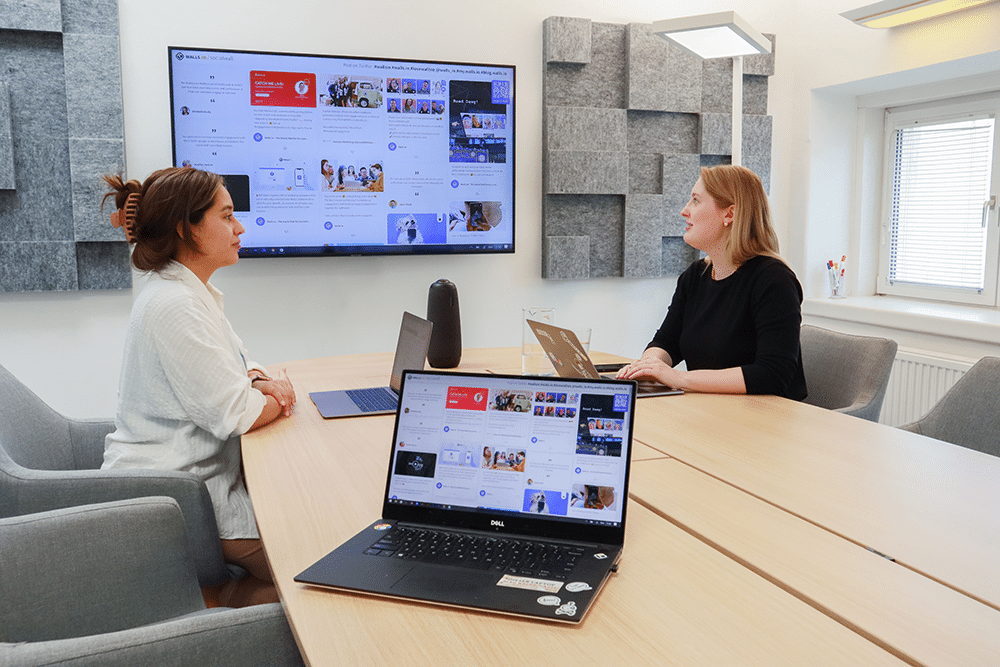
Recent statistics show that there are 32.6 million Americans who work remotely, approximately 22 percent of the U.S. workforce. With such high volume, there has been an increase in demand for technologies to assist with supporting distributed teams.
A few categories are worth understanding…
1. Cloud Collaboration
Tools like Google Workspace, Microsoft 365, and Notion enable coworkers to collaborate on documents, spreadsheets, and project boards from anywhere. Files automatically update, and version history eliminates excessive email attachments.
For many organizations, this category has become the backbone of remote work.
2. Digital Communication
Zoom meetings, Google Meet, Slack messages, and Microsoft Teams chats have replaced most water cooler discussions. Voice-over-IP (VoIP) phone systems route calls to any connected device. When a customer calls your business number, they could be reaching a teammate on the other side of the world.
3. Remote Work Tools And Automation
Project management tools, time trackers, and workflow automation apps replace much of the daily organizational tasks that occurred naturally when you worked in the same room. Automation tools can trigger actions across multiple applications, saving you repetitive admin tasks.
Industry statistics show that +80% of employees who are able to work remotely do so in some kind of hybrid or fully remote capacity. With adoption that high, these tools have become necessities.
Digital Mail Management: The Missing Piece
Video calls and cloud storage hog all the headlines. But there’s one category that often flies under the radar.
Physical mail.
Businesses that consider themselves digital-first still receive paper contracts, tax notices, checks, and government communications. Without a process to manage those documents, they pile up at someone’s home address or get lost forever.
Digital mail management addresses this gap.
Here’s the general workflow:
- Mail is delivered to a virtual business address
- The provider scans the envelope contents
- A notification is sent to a dashboard or mobile app
- The recipient chooses to open, forward, shred, or archive each item
The entire process moves from a physical inbox to a digital one.
Why This Category Matters
Missed mail can have real consequences.
An unpaid notice from the tax man, a lost check, or a returned contract can spell compliance or financial disaster. Businesses that have formed as LLC’s or corporations are also required to have a registered agent address in most states.
Digital mail management services generally cover:
- Compliance: Provides a physical mailing address that meets legal requirements
- Privacy: Removes the need to publish a home address publicly
- Speed: Same-day scanning replaces waiting for the postal system
- Searchability: Every scanned item is archived and indexed in the cloud
The third point bears repeating. It is hard to find that paper letter from two years ago. Scrolling through a cloud archive takes seconds.

Building A Modern Virtual Office Stack
Piecing it together need not cost you a fortune. You can start small and build a basic layer by layer.
Layer 1: Business Address And Mail
The foundation is a legitimate business address supported by digital mail management.
Common features to look for:
- Same-day mail scanning
- Package forwarding
- Check depositing
- Multi-recipient access
Layer 2: Digital Communication
A VoIP phone number, shared inbox, and video conferencing solution will handle most of your communication needs, internally and externally. Many providers offer these together in one subscription package.
Layer 3: Cloud Collaboration
Collaborative document platforms and project management tools help synchronize teams in different time zones. Popular choices include:
- Slack or Microsoft Teams for chat
- Zoom or Google Meet for video
- Notion, Asana, or ClickUp for project management
- Google Drive or Dropbox for file storage
Layer 4: Automation
Automation tools like Zapier or Make link your apps together. It minimizes manual data entry and repetitive tasks. This tech layer is optional initially but likely becomes helpful as you scale.
Why Virtual Office Technology Is Becoming Essential for Modern Businesses
Virtual office technology represents one of the more significant shifts in how businesses operate.
The shift isn’t necessarily about saving on rent. It’s that cloud collaboration, digital communication, automation, and digital mail management have rendered a physical office space unnecessary for most knowledge workers.
A short summary:
- Virtual office technology bundles the tools needed to run a distributed operation
- Cloud collaboration and digital communication replace in-office coordination
- Digital mail management handles the physical correspondence that still exists
- Automation reduces repetitive administrative work
Companies using this stack will usually have lower overhead and be more nimble, of any size or industry.
A modern virtual office stack gives businesses the flexibility to operate efficiently without relying on traditional office infrastructure. By combining communication, collaboration, digital mail, and automation tools, companies can lower overhead, support distributed teams, and build resilient operations for growth.







Leave A Comment