
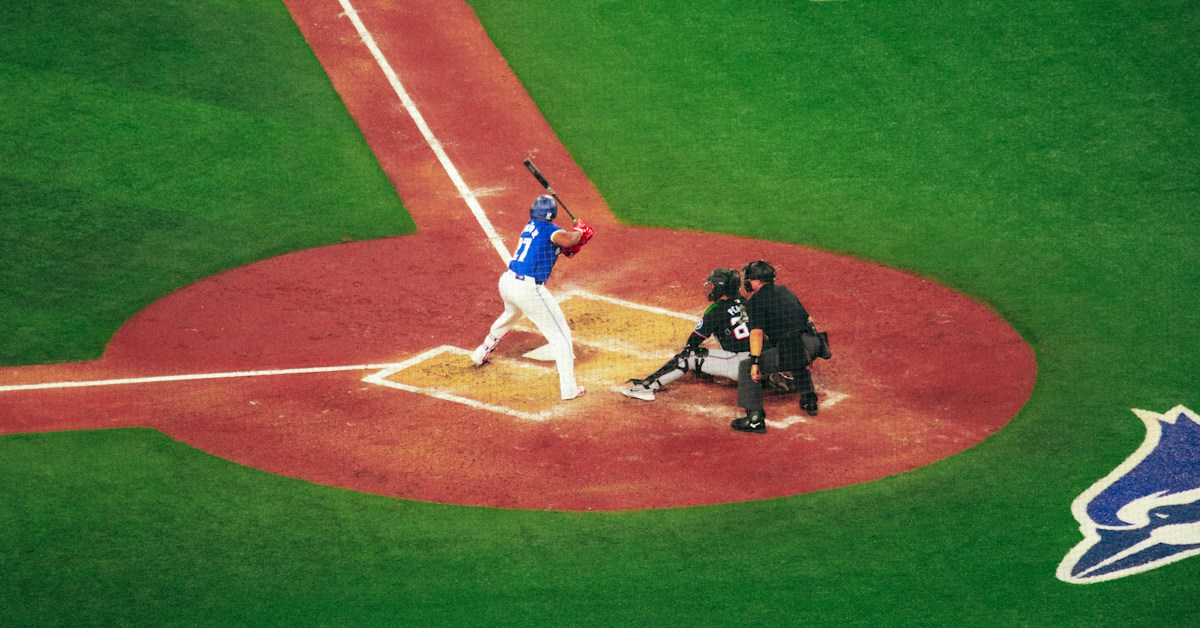
Augmented reality baseball is the layer of tracked graphics broadcasters pin onto a live game, from the strike zone box to glowing pitch trails. It matters because in 2026 those overlays stopped being harmless illustration: once a camera system could settle ball and strike arguments, Major League Baseball had to decide which graphics get to say what happened.
Points clés à retenir
- Baseball overlays do three different jobs, decorating the picture, explaining the play, or deciding the official call.
- The old TV strike zone sat at the front of the plate, while the automated zone measures mid plate.
- MLB keeps the broadcast feed showing the strike zone box out of dugouts and clubhouses to stop signaling.
- Every convincing overlay stitches together two measurements, the ball’s position and the camera’s exact position and zoom.
- Vision Pro baseball broadcasts offer immersive presence, which is a different promise from tracked graphics that explain pitches.
How Augmented Reality Is Showing Up in Baseball Broadcasts
Watch a big game now and the field is quietly crowded with things that aren’t there. There’s the translucent strike zone hovering over the plate, a colored tube tracing a slider’s break, a pitch sequence stacked like a scatter plot, and sometimes a sponsor’s logo on a wall that’s actually blank to the people sitting behind it.
Fox pushed this furthest at the 2025 Fall Classic, where it put next gen UmpCam and Swing Tracker graphics at the center of its World Series tech lineup, alongside drones flying above the ballpark. The UmpCam view is the one we’d frame and hang on a wall: you see the pitch from the umpire’s mask, with the ball’s path drawn through the zone, and suddenly you understand why hitting is so absurdly hard.
Every one of these overlays looks like the same trick. They aren’t.
Some decorate the picture, some explain the play, and since 2026 one of them decides it. That split is the whole story of baseball AR right now, and once you see it you can’t watch a broadcast the same way. Football fans will recognize the ancestry, since the NFL’s yellow line came from the same family of tricks, but baseball is where the graphics finally ran into the rulebook.
Was the Strike Zone Box on TV Ever Accurate?
It was accurate about something. Just not always about the thing fans thought.
ESPN debuted its K Zone on Sunday Night Baseball in 2001, and the box became so familiar that a generation of viewers learned to judge umpires by it. The catch is that the TV box and the umpire’s box were never quite the same shape, and they weren’t even standing in the same place.
According to MLB’s ABS explainer, past TV broadcasts set their zone at the front of home plate, while the automated system measures the pitch at the middle of the plate on a flat, two dimensional zone. The league’s research found the human umpire’s zone ran rounder and more generous to pitchers, topping out at 55.6 percent of a batter’s height compared with 53.5 percent for the ABS zone.
So when your timeline erupted over a “blown call,” the umpire and the graphic were sometimes grading two different exams. For 25 years, the box was a picture that fans treated as a ruling. That misunderstanding is the single biggest thing to unlearn about augmented reality baseball: a graphic can be precise and still answer a different question than the one on the field.
Why Doesn’t the Strike Zone Box Show Balls and Strikes Anymore?
Because it got good enough to be useful to the wrong people. Under the 2026 Automated Ball-Strike Challenge System, only the batter, pitcher or catcher can challenge a call, immediately and without help from the dugout, so any live graphic that hints at the answer becomes a cheat sheet.
La Chicago Sun-Times reported that the box stays on screen but no longer marks pitches as balls or strikes, after years of quietly using a filled circle for a strike and a hollow one for a ball. MLB went further, keeping the broadcast feed with the box out of the ballpark everywhere except the broadcast booth, so players in the clubhouse and fans by the concession stand can’t relay it.
Think about how strange that is. A broadcast graphic was demoted the moment it became good enough to matter.
For you at home, the box now explains location and leaves the verdict to the umpire or the challenge. We think that’s the healthier arrangement, and it’s a clean example of the decide tier taking authority away from the explain tier.
How Does Augmented Reality Baseball Tracking Actually Work?
Every convincing overlay solves two problems at once: where the ball is in the real world, and where the TV camera is looking at that exact frame. Get either wrong and your pitch tube floats an inch off the plate like a bad sticker.
The ball side comes from optical tracking (a ring of synchronized high speed cameras that triangulate the ball), which for MLB means the Hawk-Eye system feeding Statcast in every park. The camera side is calibration, and it’s the unglamorous part. Fox’s Brad Cheney told TV Tech his crew spends about half an hour every day tracking the drone around the ballpark so its AR graphics lock in, working with MLB and the Bolt6 optical tracking team.
That half hour is the mechanism in miniature. AR in baseball is really two measurements stitched together, the ball’s position and the lens’s position, and the graphic is only as trustworthy as the weaker of the two.
This is why the decide tier lives on the league’s own Hawk-Eye data rather than a network’s broadcast camera. A broadcast overlay can afford to be beautiful and roughly right. A challenge ruling can’t.
The Decorate, Explain, Decide Test
Here’s the framework we’d use to read any baseball overlay. Ask one question: is this graphic decorating the picture, explaining the play, or deciding the outcome?
| Tier | Baseball example | Where the data comes from | What it asks you to believe |
|---|---|---|---|
| Decorate | Virtual sponsor signs on the green panel behind home plate, drone fly-through graphics | Camera calibration only | Nothing about the game |
| Explain | K Zone pitch sequences, UmpCam pitch tubes, Swing Tracker | Statcast and broadcast tracking | Here’s what the pitch or swing did |
| Decide | ABS challenge result graphic on the videoboard and broadcast | MLB’s Hawk-Eye system, at mid plate | Here’s the official call |
The tiers carry very different stakes. Get a decorate graphic wrong and a sponsor is annoyed; get an explain graphic wrong and a commentator looks silly; get a decide graphic wrong and a run scores that shouldn’t have.
The fair objection is that the decide tier is a sliver of airtime. MLB’s own Spring Training 2025 testing averaged 4.1 challenges per game, each taking 13.8 seconds, so the ruling graphic fills roughly a minute of a full telecast while decoration and explanation fill the rest.
We agree, and that’s exactly the point. The minute matters out of all proportion, because it changed the rules for everything else: once one overlay could overrule an umpire, every other overlay had to stop pretending it could. Soccer went through a similar reckoning with offside line graphics, and the lesson travels.
Is Augmented Reality Baseball Heading for Headsets?
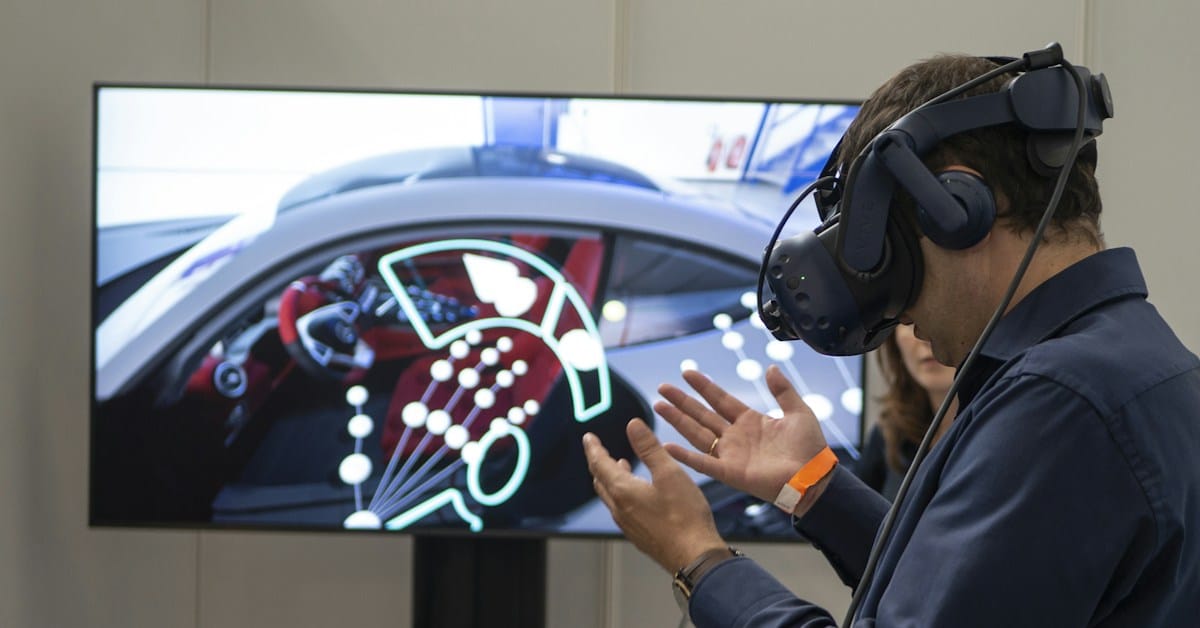
Partly, though the headset version is a different product. Apple put Friday Night Baseball live in Apple Immersive on Vision Pro starting August 28, 2026, using 3D video recorded in 8K with a 180 degree field of view.
That’s immersive video, not augmented reality in the strict sense. It moves you into the ballpark instead of pinning graphics onto it, and it answers a different desire: presence rather than proof.
Our read: the two directions will run side by side for years.
Headsets chase the feeling of the seat behind the dugout, while the truth layer stays with tracked overlays on ordinary screens, because that’s where the league can control who sees what and when. If you’re deciding where to watch, a headset buys you atmosphere, and a TV with good AR still buys you the clearest view of what the pitch actually did. Basketball is running the same experiment from the other end, as our look at AR in basketball shows.
Traducteur de jargon
Suivi optique : Following a ball or player with a set of synchronized cameras instead of radar. Each camera sees the ball from a different angle, and software triangulates its exact position many times per second.
ABS Challenge System: MLB’s Automated Ball-Strike setup, live since 2026. Umpires still call every pitch, but the batter, pitcher or catcher can tap their helmet or cap and let the Hawk-Eye cameras rule.
Camera calibration: Teaching the graphics computer exactly where a TV camera sits, where it’s pointing and how far it’s zoomed. Without it, a perfectly tracked pitch gets drawn in the wrong spot.
Virtual signage: Ads painted into the broadcast picture over a blank or green panel in the ballpark. Fans in the seats see a plain wall, while viewers in different regions can see different sponsors.
FAQs About Augmented Reality Baseball
We’re glad the box lost its voice. Baseball’s graphics were always better at showing where than ruling what, and 2026 finally made that official: the league kept the verdict, the networks kept the story. The smartest way to watch now is to treat every overlay as decoration, explanation or decision, and trust each one exactly that far.


Leave A Comment