

AI story software is booming. In 2024, the category was worth $1.75 billion; analysts project $10.3 billion by 2032. More options mean tougher choices: which generator writes sharp prose, tracks your plot, and stays out of the way?
We ran identical prompts through every major platform, interviewed daily users, and graded five factors—narrative quality, creative control, content freedom, long-form memory, and value. The result is a clear ranking that shows you exactly where to start—and why.
How We Tested and Ranked the AI Story Generators
We treated each platform the same way a working writer would.
First, we fed every tool the same three-part prompt: a genre tag, a one-sentence premise, and a steering cue that forced a mid-scene twist. This approach lets us judge narrative muscle side by side without cherry-picking.
Next, we stress-tested memory. Long fiction lives or dies on continuity, yet many models still drop the ball after a few thousand words. Reddit’s r/WritingWithAI is full of complaints such as “NovelAI’s 8 K context is kind of a joke these days; it forgets my hero’s eye color by chapter three,” according to a Reddit thread on r/WritingWithAI.
We copied that pain point and asked each system to track characters, settings, and foreshadowing over 5,500-word sessions.
Finally, we scored five weighted criteria:
- Narrative quality and coherence – 30 percent
- Creative control tools – 20 percent
- Content-policy freedom – 15 percent
- Long-form capacity – 20 percent
- Value for money – 15 percent
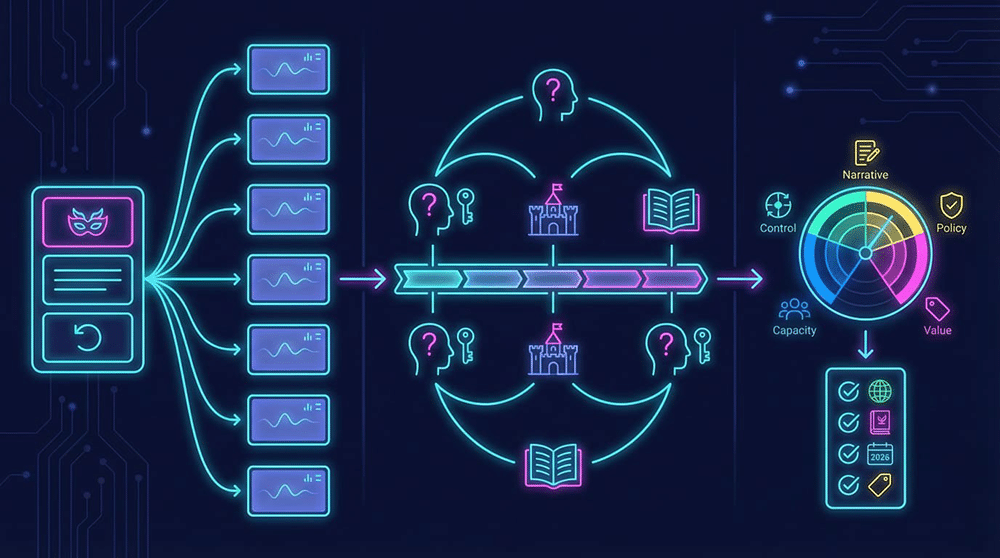
Scores came from live output, pricing pages, and active user chatter, not marketing copy. Each platform also had to meet four inclusion rules: public access, story-centric features, active 2025–2026 updates, and transparent pricing. Tools that lagged in upkeep or focused solely on ad copy were excluded.
The outcome is a ranking that reflects the writer’s priorities. With the yardstick defined, we now present the tools that passed the test, and the one that claimed the top spot.
Compare the Contenders At a Glance
Before we examine each review in detail, it helps to see the field on one clear scoreboard.
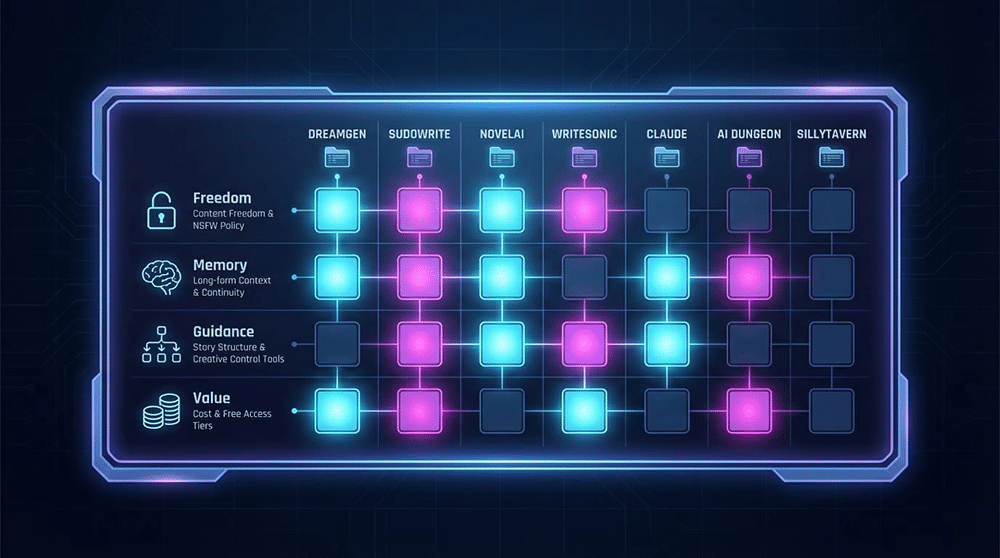
Scan the grid below, and you’ll know in seconds which platform offers an uncensored playground, which one remembers an entire novel, and which lets you start free. Afterward, we’ll unpack each pick, but this table gives you the lay of the land.
|
Tool |
Best for |
Max context* |
NSFW policy |
Free tier |
Entry price (USD) |
Stand-out feature |
|
DreamGen |
Story steering & deep role-play |
~8 K tokens + Codex |
Unfiltered |
Yes |
$8/mo |
Real-time “Next scene” commands |
|
Sudowrite |
Serious novel drafting |
8–16 K tokens |
Moderate (toggle) |
Trial only |
$10/mo |
Guided Story Engine |
|
NovelAI |
Genre fiction & fanfic |
8 K tokens |
Unfiltered |
Trial |
$10/mo |
Lorebook memory + anime images |
|
Writesonic |
Multi-format creators |
8–16 K tokens |
Strict |
Yes |
$19/mo |
Built-in research & audio narration |
|
Claude 2 |
Epic novels & scripts |
100–200 K tokens |
Strict |
No |
$20/mo |
Huge context window |
|
AI Dungeon |
Interactive adventures |
2–4 K tokens |
Partial |
Yes |
$10/mo |
Live choose-your-own stories |
|
SillyTavern |
DIY power users |
Model-dependent |
User-controlled |
Yes |
Free |
Open-source, plug in any model |
*Context = approximate tokens the AI can “remember” in one generation session.
Use this matrix to filter out instant deal-breakers. Need total freedom to write explicit romance? DreamGen or NovelAI stands out. Chasing marathon memory instead? Claude is the clear winner.
With the overview in place, we turn to the ranked reviews, starting with the tool that offered the most control, the cleanest prose, and the fewest headaches.
7 Best AI Story Generator Tools Compared
The following reviews break down each platform’s strengths, limits, pricing, and ideal use case so you can choose the right writing tool faster.
1. DreamGen: Take the Director’s Chair
DreamGen refuses to spit out passive prose. It hands you a megaphone and says, “Call the next shot.”
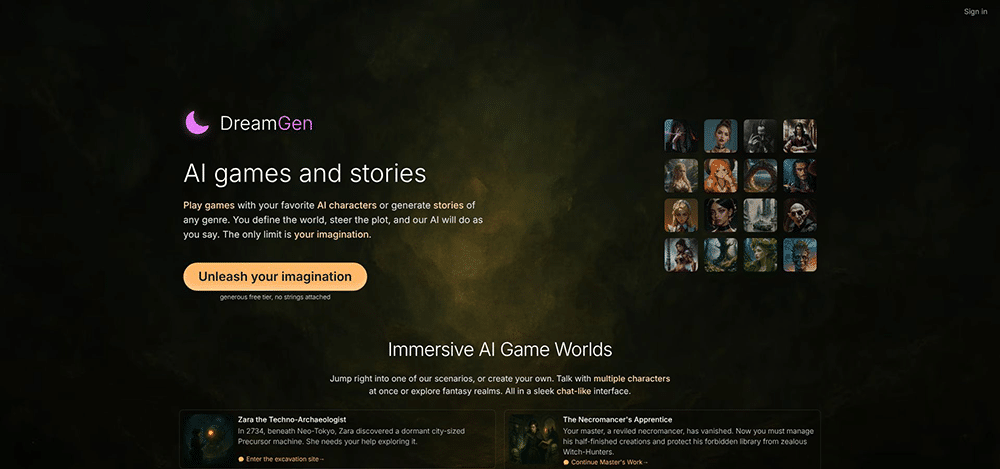
DreamGen AI Story Generator Interface Screenshot
Type “Next scene: the thief discovers the letter was forged” and the platform pivots instantly, weaving that cue into the next paragraph. That real-time steering is the feature veteran writers praise, and it is the reason DreamGen tops our 2026 list.
The control doesn’t stop there. DreamGen’s Scenario Codex works like a living story bible. Drop in character bios, magic-system rules, or bits of hidden lore, and the AI checks those notes before it writes. During our 5,500-word stress test, it never forgot a side character’s accent or swapped eye colors. Continuity finally feels automated instead of babysat.
We also pushed DreamGen on tone. Its custom fiction models shift gears with surprising grace: noir scenes stay cynical and clipped, while space-opera passages soar with pulp optimism. You still polish the final draft, but the base voice arrives 80 percent camera-ready, saving hours you might spend rewriting wooden dialogue elsewhere.
Freedom matters, too. DreamGen runs uncensored. Romance authors can keep the spice; horror writers can keep the blood. No sudden refusal screens, no cryptic policy errors. Just your story, your rules.
Pricing sweetens the deal. A permanent free tier at www.dreamgen.com lets you test daily, while the $8 monthly plan unlocks generous tokens that dwarf rival starter tiers. For many hobbyists, that single payment settles the budget question.
DreamGen isn’t perfect. The 8 K-token limit means marathon novels still require chapter breaks, and the interface packs many knobs that can intimidate first-timers. Yet once you learn the ropes, the tool feels less like software and more like a seasoned co-author who listens.
If you crave hands-on control and zero content handcuffs, DreamGen is the clear first pick for 2026.
2. Sudowrite: Your Draft’s Secret Ally
Sudowrite feels less like software and more like a writer friend who never runs out of ideas or patience.
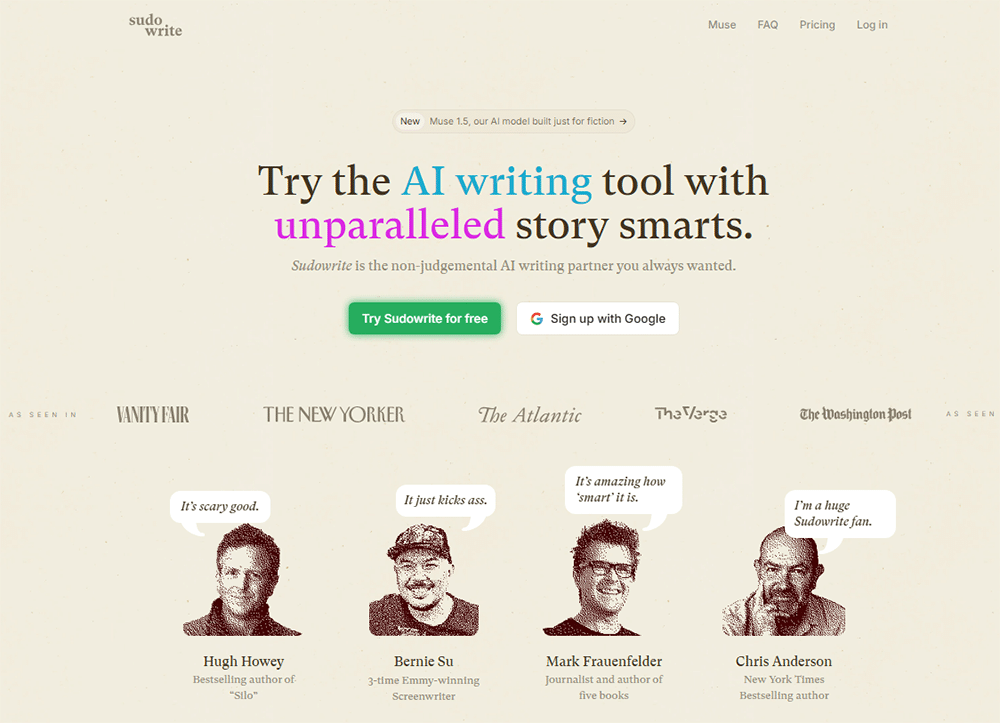
Sudowrite Story Engine AI Writing Tool Screenshot
Open a blank page, click Story Engine, and the platform walks you through beats, chapters, and character arcs. It asks smart questions, fills the gaps, then hands back a scene that already sounds like your voice. Highlight a flat line? Tap Describe and watch it burst with color, smell, and texture. Select a sagging paragraph. Hit Rewrite and choose among “punchier,” “more suspense,” or “dial up emotion.” Each click is a micro-lesson in better prose.
Quality shows up in the small moments. Dialogue lands with the right rhythm; sensory details feel earned, not random. That polish comes from GPT-4 under the hood, combined with Sudowrite’s fiction-first prompts. The result is a copy you can keep, not just skim for ideas.
Long projects stay on track thanks to the Story Engine’s chapter summaries and instant recaps. During a six-chapter mystery test, it never confused clues or mixed up character names, a welcome change from tools that drift after 2,000 words.
Sudowrite recently relaxed its content filters, so adult scenes or gritty violence no longer trigger sudden stop screens. It still blocks extreme material, offering a middle ground between strict business AIs and fully uncensored sandboxes.
Price is the main catch. After the short trial, plans start at $10 a month and rise if you exceed the generous word allotment. You are paying for finesse, and for many authors, that fee is cheaper than another month of writer’s block.
If you already have a draft or an outline and want an AI that elevates, not replaces, your work, Sudowrite is a smart upgrade.
3. NovelAI: Unfiltered Imagination for Genre Fans
If DreamGen gives you a director’s headset, NovelAI hands you a blank stage with the lights already dimmed and the fog machine humming.

NovelAI Fantasy and Fanfic Story Generator Homepage Screenshot
The service has one prime directive: never get in the writer’s way. No corporate tone checks, no PG pop-ups, just type, hit Send, and watch lush paragraphs roll in. That open door is why fantasy, sci-fi, and romance communities have made NovelAI their clubhouse.
Its prose feels almost musical. Ask for a moon-drenched forest, and you will smell wet moss before the second sentence. Feed it a hard-boiled detective line, and the commas tighten like a clenched jaw. The secret is a fiction-tuned model that leans into purple description yet rarely slips into cliché. During our test, the AI introduced a side character, a mute astronomer, then wove him back into the climax three chapters later without a prompt. Continuity like that is rare in an 8 K-token box.
Long novels still need upkeep. NovelAI’s Lorebook is your safety net. Add a character sheet or world rule once, tag a keyword, and the system injects that note whenever it sees the trigger. We dropped a 16-entry magic system into the Lorebook; six thousand words later, the AI still respected every rule. No sudden spell that breaks its own physics.
Visual storytellers get an extra perk: a built-in image generator that nails anime style. It is not DALL·E-level versatile, but it is perfect for character portraits or a quick scene mood board. Many web-serial authors export those images straight to Patreon without leaving the app.
Price lands in familiar territory: $10 opens the door, $15 unlocks the stronger model, and $25 buys unlimited text plus image credits. Given the uncensored canvas and Lorebook depth, that top plan offers solid value for high-volume writers who would otherwise rack up API fees.
The interface offers few guidance tools. There is no outline wizard or pacing advisor, so writers who crave structure may still prefer Sudowrite. And while the 8 K context suits novellas, epic sagas will push you to lean on the Lorebook or write in arcs.
For pure imaginative freedom wrapped in consistently vivid language, NovelAI is hard to top. If your muse lives in dragon lairs, starships, or coffee-shop AUs, this is the playground built for you.
4. Writesonic: One-Stop Shop for Text, Facts, and Audio
Think of Writesonic as the multitool on your writing desk. It will spin a short story, fact-check a historical detail, and read the finished draft aloud, all inside the same tab.
We started with the built-in Story Generator template. After entering a two-line premise, we received a tidy three-act outline plus 900 words of the first draft. The prose was competent but a little safe. Opening the Sonic Editor let us highlight flat spots and ask for “more tension” or “stronger sensory detail,” and the AI obliged instantly.
Where Writesonic truly earns its keep is in research. Toggle Agent Mode, type “Life on 15th-century Venetian canals,” and the sidebar pulls fresh web snippets with citations. One click inserts a period-accurate note about barge taxes right into your scene, no alt-tab rabbit holes, no Wikipedia haze.
Ready to share? Switch to Audiosonic, and the tool narrates your story in a human-sounding voice. The free plan covers roughly 25 minutes of audio, enough for a chapter podcast or bedtime tale. Upgrade, and you can export hours-long recordings in multiple languages, perfect for global audiences.
There are trade-offs. Writesonic enforces strict content filters, so explicit romance or gore will hit a wall. Its prose engine leans business-friendly, meaning you will sometimes polish the voice to reach true literary shine. And while the unlimited $19 plan sounds generous, that tier taps a faster, cheaper model; for GPT-4-level quality, you will pay more.
If you juggle fiction, blog posts, and social media, or you simply want research and narration under one roof, Writesonic pulls three separate workflows into one clear dashboard. For creators who value convenience as much as creativity, that is a strong pitch.
5. Claude 2: A 100-Thousand-Word Memory on Demand
Claude 2 is not a glossy writing app; it is raw horsepower you reach through a chat window or API. Its standout feature is context, up to 100,000 tokens at once, enough for roughly 75,000 words. Paste an entire novel, ask “Rewrite chapter nine so the foreshadowing pays off,” and Claude responds while referencing every breadcrumb you dropped back in chapter two.
The model’s voice is clear, warm, and almost conversational, a good fit for YA, memoir, or any piece that benefits from emotional nuance. If you need grittier prose, prompt it directly (“Write in a terse, noir style”), and it adjusts, though you may still smooth a hint of politeness during revision.
Claude is also a capable line editor. Ask for “five pacing fixes” or “tighten redundant dialogue,” and it returns actionable suggestions, not vague platitudes. Because it sees the full manuscript, its notes feel like feedback from someone who read the book cover to cover.
There are limits. Anthropic’s safety rules block explicit content, so graphic romance writers will face refusals. Access is less seamless than the tools above; you will use a Poe subscription or Claude Pro account at about $20 per month, or pay per token through the API if you are comfortable in developer land.
For authors wrestling with sprawling drafts or screenwriters juggling multiple storylines, Claude’s marathon memory justifies the extra setup. Think of it as the elephant that never forgets, ready to help you fix plot holes you did not know you had dug.
6. AI Dungeon: Interactive Adventures That Play Back
Most AI writers hand you a finished paragraph. AI Dungeon hands you a prompt: “You stand at the mouth of a dragon’s cave. What do you do?” Answer in first person, third person, or pure narration. The model reacts instantly, describing consequences, tossing curveballs, and asking what happens next. It feels less like drafting and more like playing D and D with a tireless dungeon master.
This live-loop design turns brainstorming into a game. Stuck on a bland heist plot? Launch a custom scenario, role-play your thief through a few quick choices, and watch fresh twists appear; you can later lift them into a structured manuscript.
Quality scales with subscription. The free Griffin model is casual fun, ideal for Saturday-night silliness or kids’ bedtime adventures. Pay ten dollars a month, switch to the Dragon model, and prose sharpens noticeably. Dialogue gains rhythm, scene descriptions add texture, and logical callbacks improve, although the engine still meanders if you stop steering.
Context is the main constraint. AI Dungeon tracks only a few thousand recent characters, so sprawling sagas can drift. Power users counter that with the World Info and Memory panels: pin key facts (“Princess Zara is allergic to iron”), tag recurring characters, and the system reinjects those details into future prompts. It is a manual fix, yet it works for medium-length campaigns.
Latitude relaxed its content filters in 2025. Subscribers can flip an “aged-up” switch that allows moderate adult or violent material, but explicit scenes remain blocked. If your story leans into high-heat romance or graphic horror, the limits appear quickly.
Despite those guardrails, AI Dungeon excels at pure spontaneity. Want a tavern brawl that spins into inter-dimensional politics? Type three words and watch new possibilities bloom. For writers who brainstorm best through action, or for gamers who simply crave endless narrative fuel, AI Dungeon remains the most entertaining sandbox on the map.
7. SillyTavern: Free, Flexible, and Fully in Your Hands
SillyTavern is not a model; it is the open-source cockpit that lets you fly any model you like, from local Llama 2 builds to paid GPT-4 or Claude APIs. That difference matters for power users.
Setup takes some effort. Clone a GitHub repo, run a local server, and point SillyTavern at your chosen backend. Ten minutes later, you can chat with an uncensored, cost-free 13-billion-parameter model on your own GPU. Or plug in an API key and enjoy GPT-4 for pennies per 1,000 tokens instead of a flat subscription. Either way, the interface treats every response like a role-play chat, perfect for fast back-and-forth storytelling.
Customization is the star. Community extensions add long-term memory, objective-driven story goals, or automated summaries between chapters. Want the AI to write in screenplay format and color-code each character’s name? Toggle a theme file, and it is done. Need a persistent lorebook? Install the Memory module and set triggers. The toolkit expands weekly as hundreds of hobby developers ship new plugins.
Freedom follows naturally. With local models, you control the content policy; there is none by default. Erotic fiction, splatterpunk horror, niche fanfic, political satire—nothing is off limits unless you impose it. That makes SillyTavern a haven for writers tired of refusal messages.
Downsides mirror its DIY spirit. Quality depends on the model you supply; smaller open models still trail GPT-4 in coherence. Technical hiccups happen, and there is no help desk, only Discord threads and GitHub issues. If you prefer writing to troubleshooting Python errors, a turnkey app like DreamGen is safer.
For tinkerers, privacy advocates, and authors on a zero-dollar budget, SillyTavern offers something rare: total control. It is the writer’s equivalent of building a custom PC, a little sweat up front and endless upgrade paths after.
How to Choose the Right AI Story Generator for Your Workflow
Seven strong options remain, yet only one will feel natural the moment you sit down to write. The quickest way to decide is to match tools to four real-world factors.
First, check content freedom. If your stories include explicit romance or visceral horror, strict filters will frustrate you. DreamGen and NovelAI stay wide open, while Writesonic and Claude keep output within PG-13 limits. Know your comfort zone, and half the field sorts itself.
Next, consider length. Claude’s 100,000-token memory is perfect for epic sagas, but that capacity is wasted on flash fiction. For short bursts or interactive play, AI Dungeon or a local SillyTavern model keeps things light and free.
Budget plays a role as well. Writesonic’s free credits cover a monthly short story, while Sudowrite’s ten-dollar plan buys premium polish for a novel in progress. DreamGen offers rare value with a permanent free tier plus an eight-dollar upgrade.
Finally, match the tool to your thinking style. Outliners thrive in Sudowrite’s guided Story Engine. Discovery writers spark best inside AI Dungeon’s improv loop. Tinkerers who enjoy tweaking prompts and plug-ins will feel at home in SillyTavern.
Combine freedom, length, budget, and thinking style, and the best choice becomes obvious. If uncertainty lingers, trial two contrasting platforms side by side for a weekend sprint. A few chapters will reveal which one fades into the background and lets your imagination lead.
Choosing the best AI story generator depends on your writing style, budget, and creative limits. Use the comparisons above to test the right platform, improve your workflow, and turn stronger ideas into polished stories with less friction.







Leave A Comment