
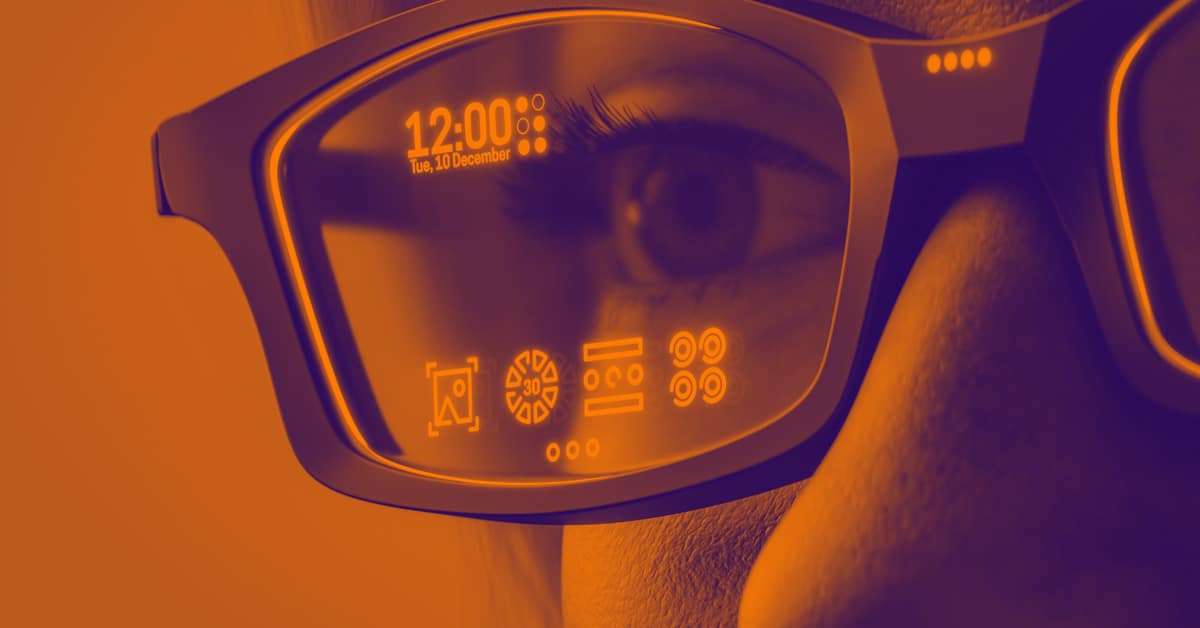
AI glasses are ordinary looking frames with a camera, microphones and speakers that let an AI assistant see and hear what you do, then answer in your ear. They matter because they move AI off a screen you check and onto your face, where it shares your point of view.
Key Takeaways
- Most AI glasses sold today have no display at all, so the screen is not the defining feature.
- The frames handle wake words and simple commands locally, while heavier reasoning runs on distant cloud servers.
- Your paired phone supplies setup, storage and connectivity, so it remains part of the system you’re buying.
- Camera-free audio glasses still count, because microphones and context, not lenses, are what feed the assistant.
- Judge any pair by its assistant, data handling and phone compatibility before you worry about a display.
What Are AI Glasses, and How Do They Actually Work?
AI glasses are eyewear with a camera, a microphone array, open-ear speakers and a small processor tucked into the frame, all connected to an assistant you talk to out loud. Ray-Ban Meta glasses are the ones you’ve probably spotted in the wild, and Google’s Gemini frames from Warby Parker and Gentle Monster are the newest arrivals. They look like glasses because looking like glasses is half the job.
The working loop is almost comically simple. You say “Hey Meta, look and tell me what this sign says,” a small chip catches the wake word (the trigger phrase the glasses listen for), and the camera snaps a frame. According to Meta’s own help pages, your glasses send that photo to Meta’s cloud for processing, and Meta AI reads the answer back through the speakers.
Here’s the part most explainers skip.
The clever bit of AI glasses isn’t what they put in front of your eyes. It’s what they point at the world on your behalf. Every other personal computer you own is an output device first, a screen built to show you things, while AI glasses are an input device first, built to catch what you see and hear so an assistant can finally share the scene.
Sensors First, Screen Optional
Why build a computer around input? Because an assistant is only as useful as the context it gets, and context has always been the bottleneck. Asking a phone chatbot about a mystery houseplant means pulling out the phone, opening the app, taking a photo and typing a question, four chores standing between you and a ten second answer.
Glasses collapse those chores into one sentence. The camera sits near eye level and turns wherever your head turns, and the microphones sit inches from your mouth, so the device already has the best seat in the house for your view and your voice.
A phone is a window you look through. AI glasses are a window the AI looks through.
Does that hold for glasses with no camera at all? According to Meta’s Connect announcement, the new Ray-Ban Meta Audio frames drop the camera entirely and still run Meta AI for up to 12 hours on a charge. Strip out the lens and you still have a sensing device, one that listens instead of looks, which is why the microphones, not the camera, are the part no AI glasses can live without.
So when you size up any pair, start with a different question than the one the marketing wants you to ask. Not “what will it show me?” but “what can it perceive, and how well?”
The Face, Pocket, Cloud Split
A glasses frame has room for a battery the size of a stick of gum and a chip that can’t run hot against your temple. So the work gets divided across three places, and once you see the split, every quirk of AI glasses suddenly makes sense. We call it the Face, Pocket, Cloud split.
| Layer | What lives there | What it handles | Why it sits there |
|---|---|---|---|
| Face: the glasses | Camera, microphones, speakers, a low power chip such as Qualcomm’s Snapdragon AR1 | Wake word, photo and video capture, calls, audio playback, simple commands | Closest to your senses, but tight on battery and heat |
| Pocket: your phone | Companion app, wireless link to the frames, mobile data | Setup, settings, relaying requests, storing your photos and videos | Has the battery and the internet connection the frames lack |
| Cloud: data centers | Large multimodal models (AI that reads images, sound and text together) such as Meta AI and Gemini | Describing scenes, translating signs, answering questions, remembering context | Needs computing power far beyond anything that fits in a frame |
Meta’s own engineers spell out the division. Simple requests like placing a call or answering a text run entirely on the glasses, while more advanced features need AI models far larger than could ever be packed into a pair of frames.
That’s why your glasses get noticeably dimmer in a basement with no signal.
It’s not the glasses failing. It’s the glasses admitting where their brain actually lives, which makes buying AI glasses less like buying hardware and more like choosing which assistant gets a seat on your face.
Don’t Display Glasses Prove the Screen Matters Most?
Fair objection. Meta Ray-Ban Display puts a full color screen in the right lens and pairs it with a wristband that reads finger gestures, and Chinese makers like Rokid and Alibaba ship waveguide displays (thin lens layers that pipe projected light into your eye) too. If screens were optional, why would anyone bother?
Because buyers, so far, have voted with their wallets. Counterpoint Research found display-less models made up 96 percent of AI glasses shipped in the first half of 2026, though display models are growing faster from a much smaller base. We expect that gap to narrow as waveguides get cheaper and lighter, but today the screen is the exception.
Look at what the display does when it’s there: it shows captions, directions and answers produced by the same camera, microphones and cloud loop. The screen is a nicer way to receive the answer. The sensing is still what produces it.
The sturdier half of the objection is about the brain, not the screen. Qualcomm’s AR1+ chip is built to run small language models (compact AI designed for tiny chips) directly on the glasses, and the company has demoed a generative model answering with no phone or cloud involved. That nudges intelligence toward the face over time, yet on-glass models are still small, and the heavy reasoning in glasses you can buy today happens in the cloud.
What Do AI Glasses Mean for Your Privacy and Your Choices?
The misunderstanding here is predictable. People judge AI glasses by the display they don’t have and fear the camera mainly as a recorder, when the bigger data flow is quieter: the photos, audio and context your questions send to a server many times a day. We dug into that tension in our piece on AI glasses privacy, and the short version is that the stranger in your shot never agreed to be part of your query.
Some companies are designing around it. Google says its Gemini frames automatically redact bystanders’ faces from camera visuals before Gemini processes them, and an indicator light flags photo and video capture. Meta ships a capture LED on every generation too, though whether a small light counts as consent for a passerby is a question nobody has settled.
The stakes are climbing, because the assistants on the far end are moving from answering questions to running errands. Meta announced in September that it’s bringing Muse, its personal AI agent, to its glasses, and an agent that acts on what it sees needs even more of your context.
So judge a pair the way you’d judge an assistant who follows you around all day. What can it perceive, where does it send what it perceives, and who answers on the other end? A freelance photographer after a hands-free camera, a consultant who wants recaps between client visits and a manager rolling glasses out to field technicians are buying similar sensors but very different cloud bargains.
If you’re still sorting the categories, our glasses category breakdown maps where each one fits.
Jargon Translator
Multimodal model: An AI model that takes in more than one kind of input, such as images, speech and text, at the same time. It’s the cloud brain that lets your glasses answer questions about whatever the camera sees.
Wake word: The trigger phrase, like “Hey Meta” or “Hey Gemini,” that a low power chip on the glasses listens for. Hearing it is what tells the glasses to start capturing and sending your request.
Waveguide: A thin, transparent layer inside a lens that channels projected light toward your eye, so text and graphics appear to float in your view. It’s the optics trick behind display glasses like Meta Ray-Ban Display.
Small language model: A compact AI model trimmed to run on modest hardware like a glasses chip. It trades breadth of knowledge for speed, privacy and the ability to keep working without a connection.
FAQs About AI Glasses
AI glasses will get displays, sharper chips and bolder agents, and the spec sheets will keep shouting about screens. Don’t be fooled. The real product was never what you see in the lens. It’s an assistant that finally shares your point of view, and the question worth asking is whose cloud gets to look through your eyes.




Leave A Comment