

Videos have come up as one of the best ways to move information through the Internet. Lately, companies, schools, advertisers, and also content creators have started to use videos to explain their ideas and share their stories in a more visual manner. However, creating quality videos has always needed much time, expertise, and expensive software.
The advent of the AI video generator has revolutionized the way videos are created through the automation of numerous steps of video-making. With the use of AI technologies, such generators will help to make videos out of text, images, or other materials while minimizing the need for manual editing.
What Is an AI Video Generator?
An artificial intelligence video generator refers to software tools that employ AI technology to help in creating videos. Rather than edit scenes manually, all that needs to be done is to provide prompts, scripts, and media content from which the AI will create the video.
Some platforms have applied technologies like natural language processing, computer vision, and machine learning to automate processes such as generating scenes, creating subtitles, voiceovers, transitions, and effects. This technology aims to simplify the production process without eliminating creativity.
How AI Video Generators Work
While each application differs in terms of its particular features, all AI-based video creators operate within a common process. At first, the user gives whatever input they have: written text, images, a slideshow presentation, or maybe even a short video clip. Then the program checks that information and decides, in a way, what seems like the best visual layout for it, kind of overall.
The next step is when the system automatically finds layouts, animations, transitions, and media elements suitable for the information provided. In addition, some systems can even create AI voices, subtitles, and background music.
Common Applications
AI video generator supports a wide variety of use cases across different industries.
1. Educational Content
Educators, both offline and online, use AI technology to turn lessons into engaging educational video content. Also, automated voiceover and subtitles help make the lessons more accessible, so more people can follow along.
2. Marketing Content
Marketing departments generate explainer videos, promotional announcements, and social media content by avoiding unnecessary editing tasks.
3. Corporate Communication
Companies generate internal training videos, onboarding materials, and other corporate communication videos by means of AI-powered processes.
4. Social Media Video Content
Creators tend to use AI to produce short-form videos suitable for visually driven platforms.
Benefits of Using AI Video Generators
These advantages explain why AI video generators are becoming valuable tools for businesses, educators, and creators seeking faster, simpler, and more efficient video production.
1. Faster Content Production
The process of editing, animating, and captioning takes much less time with AI. This way, artists can put in more effort into planning and narrative building, rather than performing monotonous tasks.
2. Reduced Technical Complexity
Traditional video editing typically requires higher levels of technical skills from users. In contrast, with the help of artificial intelligence, everything gets easy and kind of user-friendly, which may feel smooth right away.
3. Improved Workflow Efficiency
A bunch of the same editing steps can be handled by automation, so you do not have to do every single thing manually, again and again. That means individuals and teams can wrap up projects faster, while still keeping a steady style and consistent formatting.
4. Greater Accessibility
Features like auto subtitles, AI voice generation, and multilingual options make it easier for a wider crowd to reach and use the information; honestly, it just works better.
Current Limitations
Though having their benefits, AI-based video generators have some restrictions as well. Creative narratives may benefit from the involvement of humans since emotional appeal is required in some cases, or the narrative becomes quite complex. The images that are generated by AI technology require some manual adjustments to improve their accuracy or to match the company’s style.
Moreover, users should check the created content prior to its publication to verify its facts, adjust pronunciation, and choose the most appropriate visuals.
Ethical Considerations
As AI-created media keeps showing up more and more, careful and responsible use still matters, a lot. People making content should really get what copyright rules are about, especially when they’re pulling images, music, or any third-party materials into their work, even if it feels routine. Also, being open helps, for example, when AI-generated voices or synthetic media are used in a workplace kind of setting or in any professional exchange.
For orgs and teams, setting up a review process is smart, not just a quick check. That way, AI-generated videos can still land on the expected quality level and, importantly, they accurately reflect what the message is supposed to say, without drift.
Choosing an AI Video Generator
Choosing an AI video generator usually isn’t about one single all-purpose answer. It depends on what your specific project needs, period. Things like which input formats are supported, how much editing freedom you get, the final export quality, whether collaboration tools exist, and what pricing models look like can all end up steering the decision.
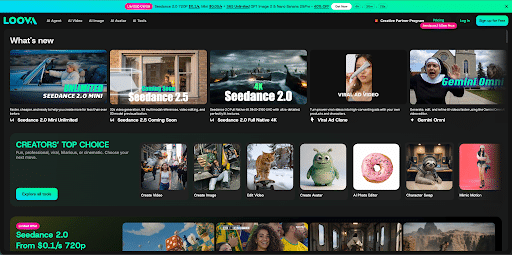
For readers interested in exploring one example of an AI-powered video creation platform, Loova provides additional information about AI-assisted video generation.
Future of AI Video Creation
Further advancements in AI will continue at a fast pace, with future AI video generators becoming even more personalized, realistic, and automated.
New trends might consist of natural AI avatars, advanced multilingual speech synthesis, enhanced scene generation, and closer cooperation between AI tools and human creators. The development of new technologies is not intended to replace creative workers but is aimed at becoming productivity tools for them.
An AI video generator is an example of significant progress in digital content creation. Due to the automation of various technical stages of video making, such tools allow people to create videos more effectively and simply. Even though the creative skills of humans are needed for the creation of engaging stories, AI technologies will be useful for the acceleration of the work process in such spheres as education, business, marketing, and online interaction.





Leave A Comment