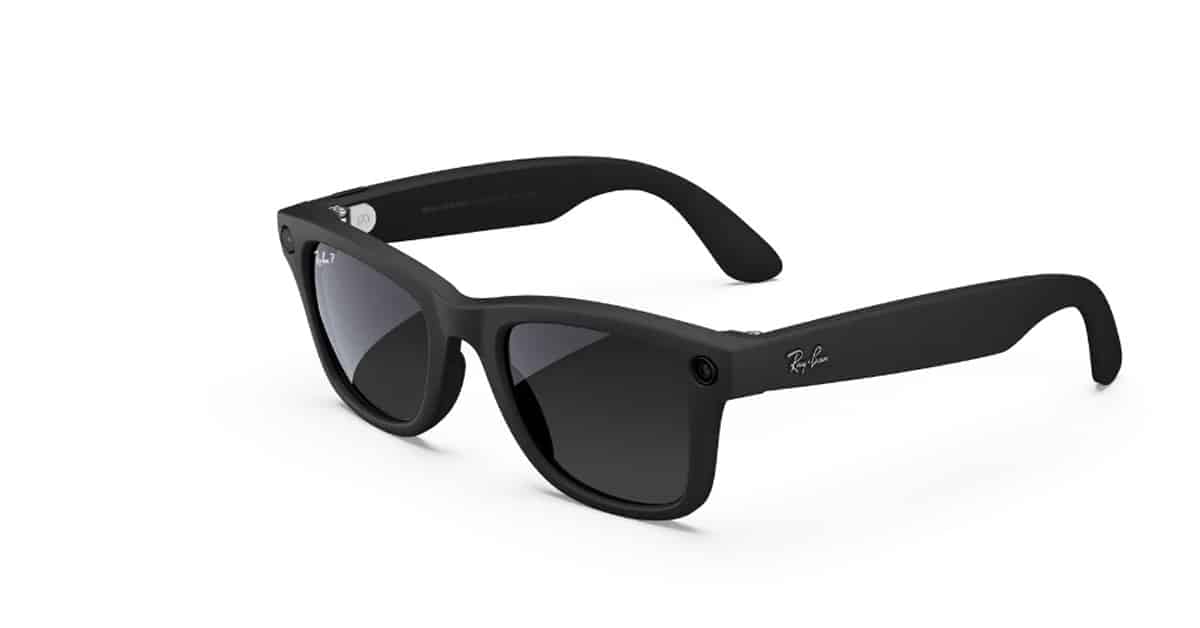
Ray-Ban Meta smart glasses are Ray-Ban frames with a camera, microphones, open-ear speakers and Meta’s AI assistant built in, so you can shoot video, take calls, play music and ask about what you’re looking at. What they can actually do depends less on the frame you buy than on the software Meta ships, gates and prices afterward.
Wichtigste Erkenntnisse
- The frame fixes the ceiling, because its camera, microphones and speakers decide what any update can ever unlock.
- Visual questions like reading a menu travel through your phone to Meta’s servers before an answer reaches your ear.
- New features usually land first with Early Access members in the US and Canada, then spread country by country.
- Conversation Focus proved in 2026 that a feature running on the glasses themselves can still get a monthly meter.
- Buy for what the hardware does on day one, and treat promised agents and paid add-ons as bonuses.
What the Ray-Ban Meta Smart Glasses Can Actually Do
Strip away the keynote gloss and the current model, Ray-Ban Meta Gen 3, does five things well. It shoots photos and video from a camera in the corner of the frame, plays music and calls through speakers aimed at your ears, answers spoken questions, translates conversations and describes whatever the camera can see.
Meta’s Connect 2026 announcement lists a 12 MP camera, 3K video, a six microphone array and up to nine hours of battery for $449, an hour more than Gen 2. An LED lights up whenever the camera records, a small courtesy we dig into in our look at Datenschutzbrille für KI-Brillen.
What isn’t on the spec sheet matters just as much. There’s no screen in the lens, so every answer arrives as audio or lands in the Meta AI app on your phone, which is exactly where the line between smart, AI and AR glasses gets drawn.
Think of the frame as eyes, ears and a voice, with a fairly modest brain behind them.
That’s why two people wearing identical pairs can describe completely different products. One has every experimental feature switched on in Chicago, while the other lives somewhere half the AI menu hasn’t arrived yet.
Why Do Ray-Ban Meta Smart Glasses Keep Changing After You Buy Them?
The glasses carry the sensors, but the heavy thinking happens elsewhere. Say “Hey Meta, what am I looking at?” and the frame grabs a picture, your phone relays it through the Meta AI app, and a multimodal model, one that reads images and speech together, works out the answer on Meta’s servers before the reply plays in your ear.
That plumbing is why new abilities arrive as downloads rather than new hardware. Meta’s v21 software update on December 16, 2025 added Conversation Focus and a Spotify trick that picks a song to match your view, with Conversation Focus going first to Early Access members, owners who opt in to unfinished features, in the US and Canada.
Nobody had to buy new glasses for any of it.
For you, that’s mostly great news, since a pair bought in 2025 is a better device today than the day it shipped. The catch is that the same pipe that delivers new abilities can deliver new limits, new country rules and new prices, and you don’t get a vote on which one comes through next.
The Owned Versus Leased Test
Here’s the lens we use for every feature on these glasses: does it depend only on the sensors in the frame, or on Meta continuing to allow it, in your country, at today’s price? The first kind you own. The second kind you lease.
| Besonderheit | Where it runs | Can Meta change it after you buy? |
|---|---|---|
| Fotos und 3K-Video | Camera and storage in the frame | Only at the edges, such as rules around the recording LED |
| Music, podcasts and calls | Speakers, microphones and your phone | Rarely, though app partners like WhatsApp and Spotify can shift |
| Questions about what you see | Meta’s cloud via the Meta AI app | Yes, by country, model and update |
| Live-Übersetzung | Offline packs for some languages, cloud for others | Partly, since the cloud languages need a connection |
| Conversation Focus | On the glasses | Yes, it has carried a monthly cap since July 2026 |
Translation shows the split neatly. Meta’s translation page says Gen 3 handles English, Spanish, French, Italian, Portuguese and German without Wi-Fi once you download the packs, while Mandarin, Russian and Greek need an internet connection.
For a long time the test was simple: if it runs on the glasses, it’s yours. Then Meta broke that rule.
What Happened When Meta Put a Meter on Conversation Focus?
Conversation Focus boosts the voice of the person across the table in a loud restaurant, using the microphones and open-ear speakers you already paid for. In July 2026, Meta capped it at three free hours a month, with 15 hours for subscribers to Meta One Premium, a plan reported at $20 a month.
The twist is where the work happens. As UploadVR pointed out, Conversation Focus runs locally on the glasses, so as far as we can tell there’s little obvious server cost to pass along.
Running on your face no longer guarantees a feature belongs to you.
The camera got its own rewrite, too, and this one we applaud. A mandatory firmware update now disables capture on pairs whose privacy LED has been drilled out or tampered with, closing a loophole that let people record without the light.
That’s the misunderstanding most buyers walk in with. They read the feature list as a spec sheet, when part of it behaves more like terms of service that can be rewritten after checkout. If one feature is the reason you’re buying, ask which column it sits in before you pay.
Does the Hardware Still Matter More Than the Software?
The fair pushback goes like this: the lease framing overstates things. Capture, calls, music, translation and Meta AI questions are all still free, and one metered feature is a data point, not a pattern.
We agree with half of that. The hardware still matters most, and Meta’s own lineup proves it: the new Ray-Ban Meta Audio drops the camera entirely for $349 and up to 12 hours of battery, according to the same Connect announcement. No update will ever teach those frames to read a menu, because there’s nothing in them that can see one.
Software can unlock anything the sensors allow, and nothing they don’t.
So the frame sets the ceiling and the software decides how close you get to it, and at what price. A freelance videographer should shop the owned column hard, since the camera is the product. A company buying pairs for field technicians should study the leased column, because a feature it budgets around can change terms after rollout.
Should You Buy Ray-Ban Meta Glasses for What Meta Promises Next?
Meta’s roadmap is generous. At Connect 2026, it promised its Muse personal agent on the glasses in the coming months, plus FDA-cleared hearing enhancement for adults with perceived mild to moderate hearing loss, priced at $149.99 as an add-on or included with a Meta One subscription.
Look closely at the shape of that offer. The most medically useful audio feature Meta has announced arrives as a paid unlock for microphones and speakers already sitting on your face.
Before you buy, check three things: whether visual Meta AI works in your country, which translation languages run offline on your model, and whether the feature you want is still stuck in Early Access. Those answers tell you more about your pair than any spec sheet.
That’s why the owned versus leased split matters more now than when these glasses were mostly a camera with good speakers: the next wave of value is almost entirely software. Our advice is to buy for the owned column, enjoy the leased column, and budget for the day a favorite feature grows a price tag.
Jargon-Übersetzer
Multimodale KI: An AI model that takes in more than one kind of input at once, such as a photo plus your spoken question, and answers using both. It’s why the glasses can talk about what you see.
Early Access Program: Meta’s opt-in channel for owners who want new glasses features before everyone else. You get the shiny stuff first, along with the bugs that come with it.
Offene Lautsprecher: Tiny speakers in the temples that beam sound toward your ears without plugging them. You hear your podcast and the traffic, which is the point and occasionally the problem.
FAQs About Ray-Ban Meta Smart Glasses
Ray-Ban Meta glasses are genuinely great at seeing, hearing and talking back, and they’ll keep getting better. Just read the box correctly. You own the sensors. You rent the job description, and Meta holds the pen on every clause it can reach from a server or a firmware update.




Leave A Comment